
Magazine › Interiors
When Walls Become Libraries: Designing Spaces for Stories
A home's true luxury lies not in what it displays, but in what it shares. How thoughtful curation of books reshapes domestic architecture.
By the Ander Baher Editorial Desk · 5 October 2026
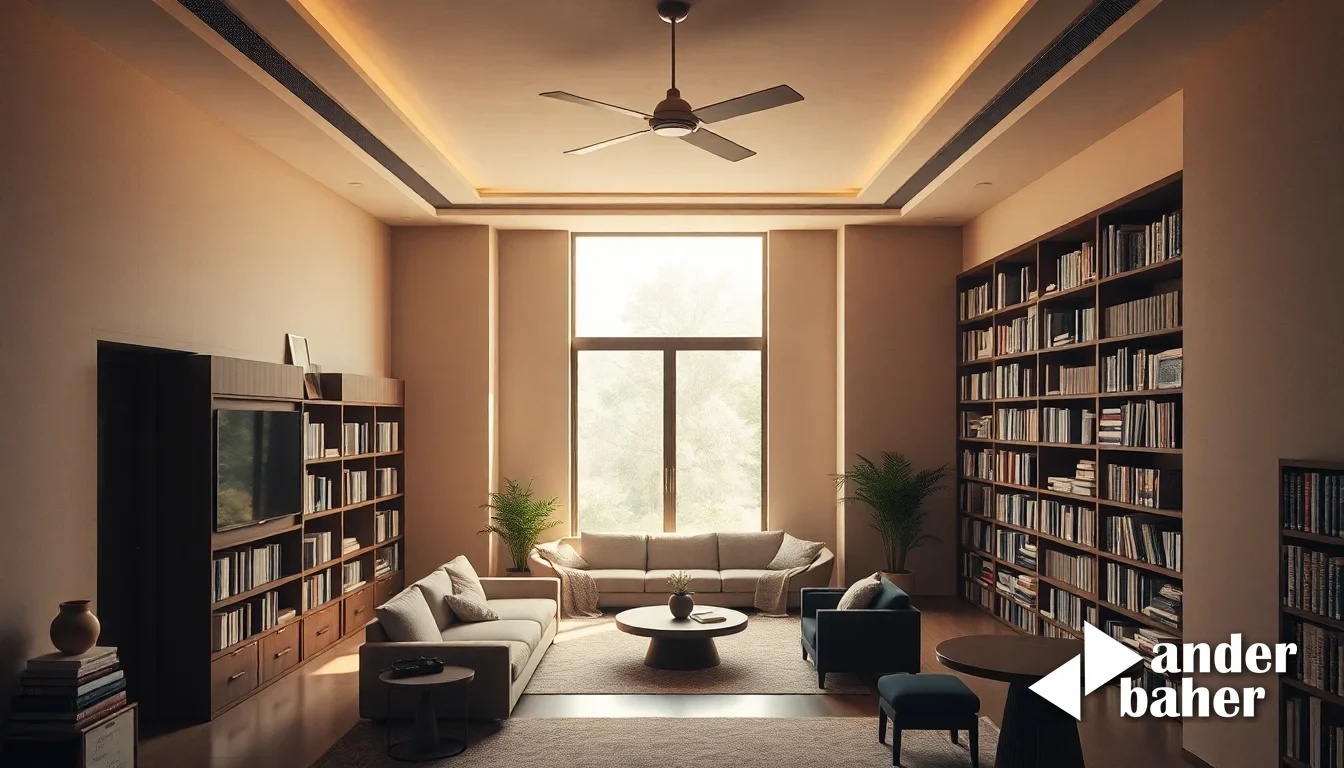
There is a particular silence that settles over a room lined with books—not the silence of emptiness, but of presence. Each spine, each weathered cover, each annotated margin represents a conversation waiting to happen. In Indian homes, where living rooms have long served as stages for display and formality, a quieter revolution is underway: the reclamation of domestic space as a repository of ideas, meant not merely to be owned but genuinely to be lived with and, increasingly, shared.
The impulse to open one's home library—whether through a Little Free Library on the gate, a community exchange shelf in a Bangalore apartment lobby, or simply keeping shelves accessible rather than locked behind glass—speaks to a design philosophy that contradicts the fortress mentality of much contemporary interior architecture. It asks: what if the most valuable thing a home could hold was not the rarity of its contents, but their circulation?
The Architecture of Sharing
Designing for this requires a fundamental shift in how we think about storage and display. A library meant only for private consumption can hide away in a corner, aesthetic concerns secondary to capacity. But a library designed as a semi-public space—one where family, friends, and eventually strangers might browse—demands architectural consideration. Height matters. Accessibility matters. The path to the shelves must be intuitive, inviting. In Mumbai's older homes, where deep verandahs and transitional spaces abound, such libraries naturally emerge at the threshold between private and communal zones.
The physical arrangement becomes a subtle form of curation. A shelf at eye level, well-lit and open to casual browsing, communicates generosity. Books spine-out rather than hidden behind closed cabinetry suggest conversation rather than collection. Materials shift too—soft woods, natural finishes, and accessible hardware replace the polished mahogany and brass fixtures that once signaled untouchability.
Beyond the Coffee Table Book
Indian homes have long treated books as décor—beautiful objects to be arranged, dusted, and admired from a distance. This perspective, while not without merit, misses the essential function: the exchange of thought. When design prioritizes the readability of a space over its visual perfection, something shifts. Worn pages become more honest than pristine covers. Dog-eared poetry collections tell truer stories than first editions in plastic sleeves.
The most compelling home libraries emerging in Indian design today are those that embrace evidence of use. A shelf designed to be replenished, borrowed from, and returned to—rather than accumulated within—requires a different kind of architecture. It asks for mobility: lighter shelving, perhaps, or modular systems. It asks for generosity in labeling and organization. It asks for the kind of care that comes from knowing that strangers might hold these books.
A Quiet Act of Belonging
There is something fundamentally different about a home that positions its library as a gift to the neighbourhood rather than a fortress of private taste. It is not about performative altruism or Instagram-ready philanthropy. It is about understanding that a well-designed home is not one that contains the most, but one that circulates the most—ideas, stories, perspectives, and the particular intimacy that comes from holding a book someone else has held.
The design of such spaces asks little of materials and much of intention. A simple wooden shelf, well-positioned near a window, with a small sign that reads please borrow, please share, becomes more architecturally significant than many rooms twice its size. It transforms a house into something closer to what homes, at their best, have always been: vessels of collective memory.
Sources & further reading
- designboom — valentino asks guests to bring books to its runway show for donation to public libraries ↗
- designboom — LOEWE’s paris runway occupies an ethereal arena by casper mueller kneer ↗
- designboom — glazed passage frames lake views through this compact japanese house ↗
- Dezeen — Spacon fills Edition Denmark in Seoul with vintage Danish furniture and found objects ↗
An original Ander Baher perspective, informed by the coverage above.
Frequently asked
How do I design a home library that invites sharing rather than just private collection?
Position shelves at eye level in naturally visible, well-lit zones—near entryways or transitional spaces rather than hidden corners. Display books spine-out with clear labeling, use accessible materials like soft woods and natural finishes, and ensure the physical path to shelves feels intuitive and welcoming rather than formal.
What's the difference between designing for display versus designing for use?
Display-focused libraries prioritize visual perfection—pristine covers, closed cabinetry, rarity. Use-focused libraries embrace evidence of circulation: worn pages, modular or lighter shelving, and organizational systems that signal generosity. The latter communicates that books are meant to be borrowed, returned, and genuinely lived with.
Can a shared home library work in apartment buildings or urban homes?
Absolutely. Mumbai's transitional verandahs and Bangalore apartment lobbies naturally support shared libraries. Even a simple wooden shelf near a window with a small sign—positioned as a gift to your immediate community—transforms how a home relates to its neighbourhood and creates what architects call a vessel of collective memory.
Ready to transform your space — inside or out?
Tell us a little about your home or office. We'll get back within one working day.
Book a consultation