
Magazine › Interiors
When Shadows Deepen: Dark Interiors as Catalysts for Change
Darkness in a room need not retreat—it can become a deliberate design partner that transforms how we inhabit and grow within our homes.
By the Ander Baher Editorial Desk
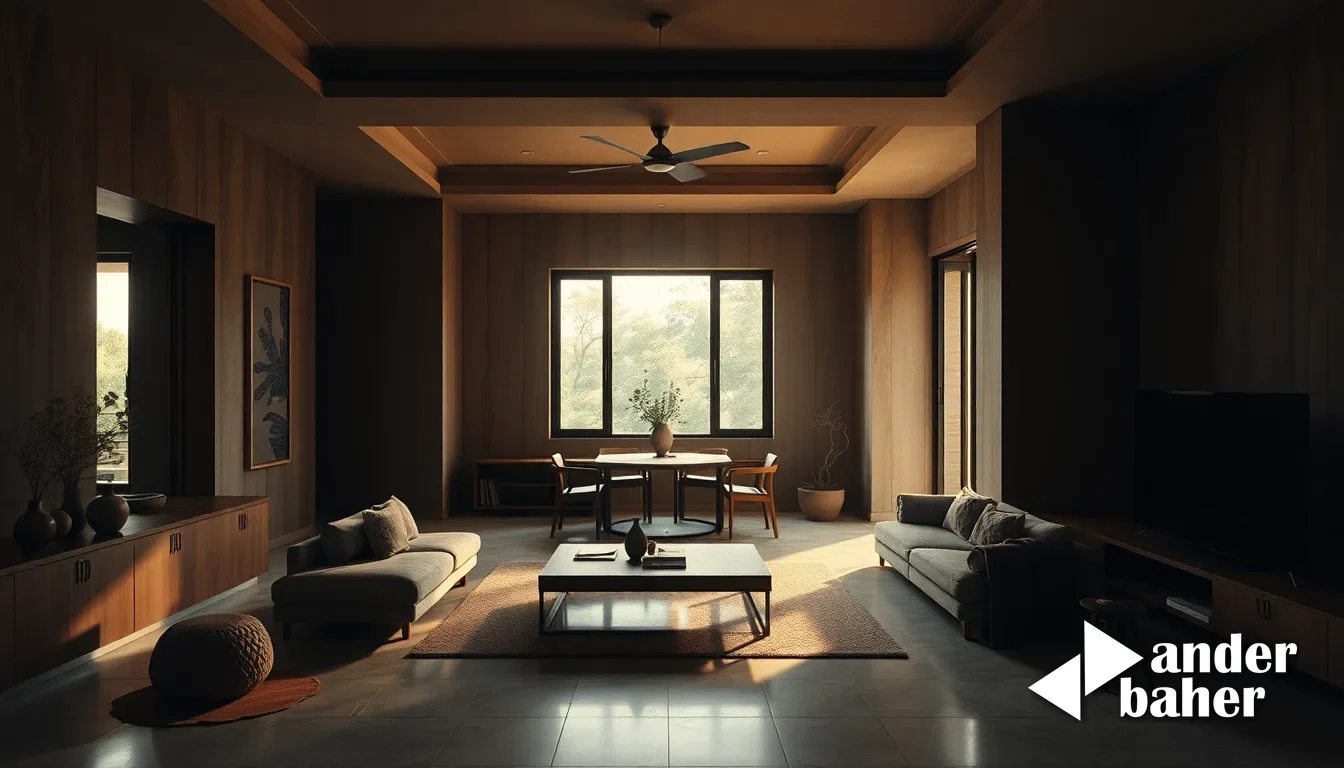
There is a particular silence that settles into a room painted deep charcoal or black. Not the silence of absence, but of presence—a thickness in the air that asks you to move more slowly, to notice the grain of wood beneath your palm, the weight of a linen curtain, the precise angle of afternoon light as it cuts across a wall. For decades, Indian interiors have leaned toward brightness: cream walls, pale silks, mirrors multiplying sunlight. But a quieter movement is emerging—one that recognises darkness not as negation, but as potential.
The Vocabulary of Restraint
Walk into a room where the walls hold shadow the way canvas holds charcoal. The effect is visceral. The eye no longer scatters across surfaces; instead, it settles. In homes across Bangalore and Mumbai, designers are discovering that deep, muted tones—graphite greys, almost-blacks, deep indigos—create an unexpected intimacy. These are not the murky palettes of neglect. They are chosen, composed, held with intention.
When you remove the optical noise of bright surfaces, something shifts internally. A dark study becomes a space for difficult thinking. A charcoal bedroom transforms into a cocoon where rest feels earned. The shadows are not hiding something; they are protecting something—your attention, your mental space, your capacity to change.
Dark as a Teacher
In Indian design tradition, we have long understood the power of restraint. The play of light within a courtyard, the strategic use of shadow beneath a jali, the cooling darkness of thick stone walls—these are not accidents. They are inherited wisdom about how darkness regulates temperature, emotion, and pace. Yet modern interiors have largely abandoned this knowledge in favour of pervasive brightness.
A dark interior demands something of its inhabitant. It requires you to become attuned to subtle shifts in tone, to notice what emerges when the eye is not fatigued by glare. This attunement—this slowing down—often precedes personal change. The room becomes a mirror not through reflection but through rhythm. It teaches by example: that depth matters, that you do not need to be visible to be present.
Living with Intention
The risk, of course, is that darkness becomes a retreat rather than a catalyst. The line between contemplative and claustrophobic is thin. Successful dark interiors balance shadow with strategy: a single wall in deep tone, paired with pale wood or natural textiles. Layered lighting that allows you to modulate the room's mood. Materials that hold depth without absorbing hope—charcoal linen, graphite plaster, warm-toned blackened steel.
Perhaps the real conversation is not about colour at all, but about permission. Permission to stop performing brightness. Permission to sit with what is difficult, uncomfortable, or uncertain. In homes where we are increasingly expected to be productive, visible, and constantly available, a room that asks us to slow down—to find meaning in shadow rather than spectacle—becomes a rare form of resistance.
The rooms that change us are rarely the ones that comfort us immediately. They are the spaces that require us to adjust, to look closer, to find our own light within the darkness they provide.
Sources & further reading
- Colossal — Dark Emotions Evoke Growth in Alejandro Aguliar Canela’s Graphite Drawings ↗
- Colossal — Glowing Paintings by Francesco Pirazzi Meditate on the Enigmas of Absence ↗
- Colossal — Julie Green’s ‘The Last Supper’ Memorializes Hundreds of People’s Final Meals While on Death Row ↗
- Colossal — Milk Cartons and Bottle Gourds Form Sipho Mabona’s Tribute to His Late Father ↗
An original Ander Baher perspective, informed by the coverage above.
Frequently asked
How do dark interiors improve mental clarity and focus in a home office or study?
Dark, muted tones reduce optical noise and visual fatigue, allowing the eye to settle rather than scatter. This creates the conditions for deeper concentration—a dark study becomes a space for difficult thinking, where restraint itself becomes a form of intention.
What is the difference between a contemplative dark room and a claustrophobic one?
Successful dark interiors balance shadow with strategy: a single accent wall in deep tone, layered lighting for mood control, and materials that hold depth without absorbing hope—such as charcoal linen, graphite plaster, and warm-toned blackened steel.
How do dark interiors connect to traditional Indian design principles?
Indian design tradition has long understood the power of restraint through courtyards, jali screens, and stone walls—all using shadow to regulate temperature, emotion, and pace. Modern dark interiors reclaim this inherited wisdom in contemporary form.
Ready to transform your space — inside or out?
Tell us a little about your home or office. We'll get back within one working day.
Book a consultation