
Magazine › Interiors
The Studio as Home: Craft, Clay, and Daily Living
When a maker's studio becomes inseparable from their living space, the boundary between work and home dissolves into something more honest.
By the Ander Baher Editorial Desk · 14 September 2026
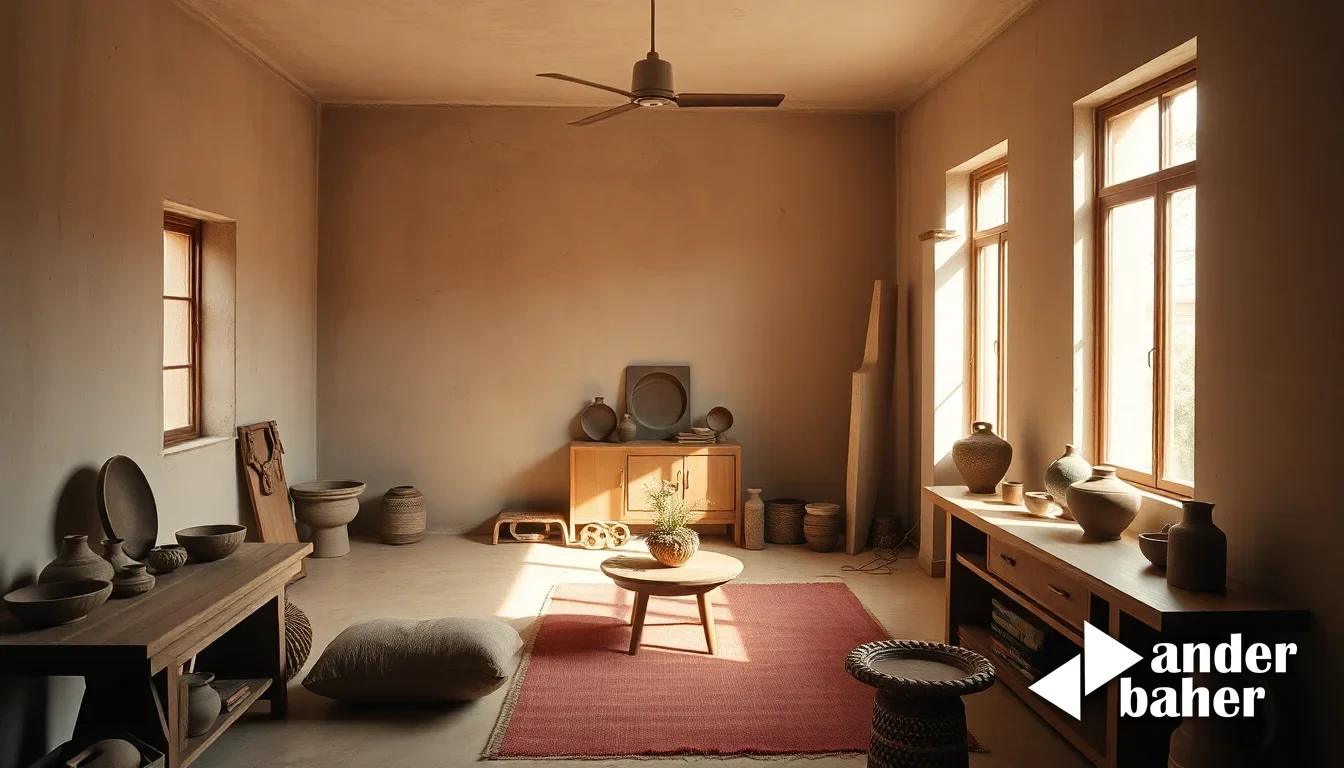
There is a particular quietness that settles in a space where making happens continuously—where clay dust accumulates on shelves alongside morning tea, where the kiln's heat patterns the day as surely as sunlight. This is not the romance of the artist's garret, but something more fundamental: the integration of craft into the fabric of everyday life, until you cannot parse where home ends and studio begins.
In Indian homes, especially across cities like Bangalore and Mumbai where space is negotiated rather than abundant, this collapse of boundaries speaks to something we have always understood intuitively. The kitchen is where spices are ground and bread is shaped. The courtyard is where textiles dry and plants are tended. Work and living are not compartments; they are woven into the same cloth.
The Intimacy of Shared Space
When a home becomes a studio, it demands a particular honesty about materials and process. The plaster dust does not hide; it settles on surfaces. The raw wood and unfinished walls are not aesthetic choices imposed from above but natural consequences of a space in dialogue with making. This rawness—what some might call unpolished—is precisely where such homes find their character.
Consider how this operates in practice. A potter or ceramicist living and working in the same room develops an intimate relationship with material failure and success. The glaze that crackles unexpectedly becomes part of the breakfast conversation. The kiln's schedule dictates the rhythm of evening—not as intrusion, but as the home's own metabolism.
For homeowners drawn to this model, the practical question is not how to separate zones but how to honor the fact that making—whether it is ceramics, textiles, woodwork, or any other craft—is fundamentally a way of being present. The studio-home does not aim for pristine separation. Instead, it acknowledges that dust and impermanence are features, not flaws.
Material Honesty and Living Surfaces
What emerges in such spaces is an aesthetic grounded in material truth. Unplastered brick walls breathe; raw concrete floors age visibly; clay vessels sit alongside everyday dinnerware because they are, literally, the same practice. This is not minimalism or maximalism but something closer to acceptance—of the maker's presence in the space, and the space's presence in the work.
In Indian homes, where many families have historically housed multiple functions under one roof, there is ancestral permission for this integration. The courtyard that serves as outdoor room and drying ground. The room that is bedroom by night and workspace by day. The evolution feels less like trend and more like a return to spatial wisdom.
Designing for Honest Living
If you are considering this approach, the design question becomes one of layering rather than zoning. Robust flooring that ages well. Storage that is visible and functional rather than concealed. Surfaces that can accommodate both dust and intentional beauty. Lighting that serves both the maker's eye and the evening meal.
The studio-home asks something of its inhabitant: comfort with imperfection, commitment to the objects that surround you, and a willingness to let your work shape your space as much as your space shapes your work. It is not easier than maintaining separate domains. But it is more integrated, more honest, and ultimately, more alive.
Sources & further reading
- ArchDaily — Tsukumo Kiln Ceramic Studio / Dept.EPT. ↗
- ArchDaily — House and Studio in Kyoto / Tato Architects ↗
- ArchDaily — Split-Level Apartment / Shiye Architecture Design and Research Practice ↗
- ArchDaily — JH Gwangan Mixed-use building / U.GA Architects ↗
An original Ander Baher perspective, informed by the coverage above.
Ready to transform your space — inside or out?
Tell us a little about your home or office. We'll get back within one working day.
Book a consultation