
Magazine › Interiors
Reclaimed Brick, Living Memory: Building Authenticity into Indian Homes
How salvaged and reclaimed brick—rooted in India's architectural heritage—brings warmth, sustainability and temporal depth to contemporary interiors.
By the Ander Baher Editorial Desk · 21 October 2026
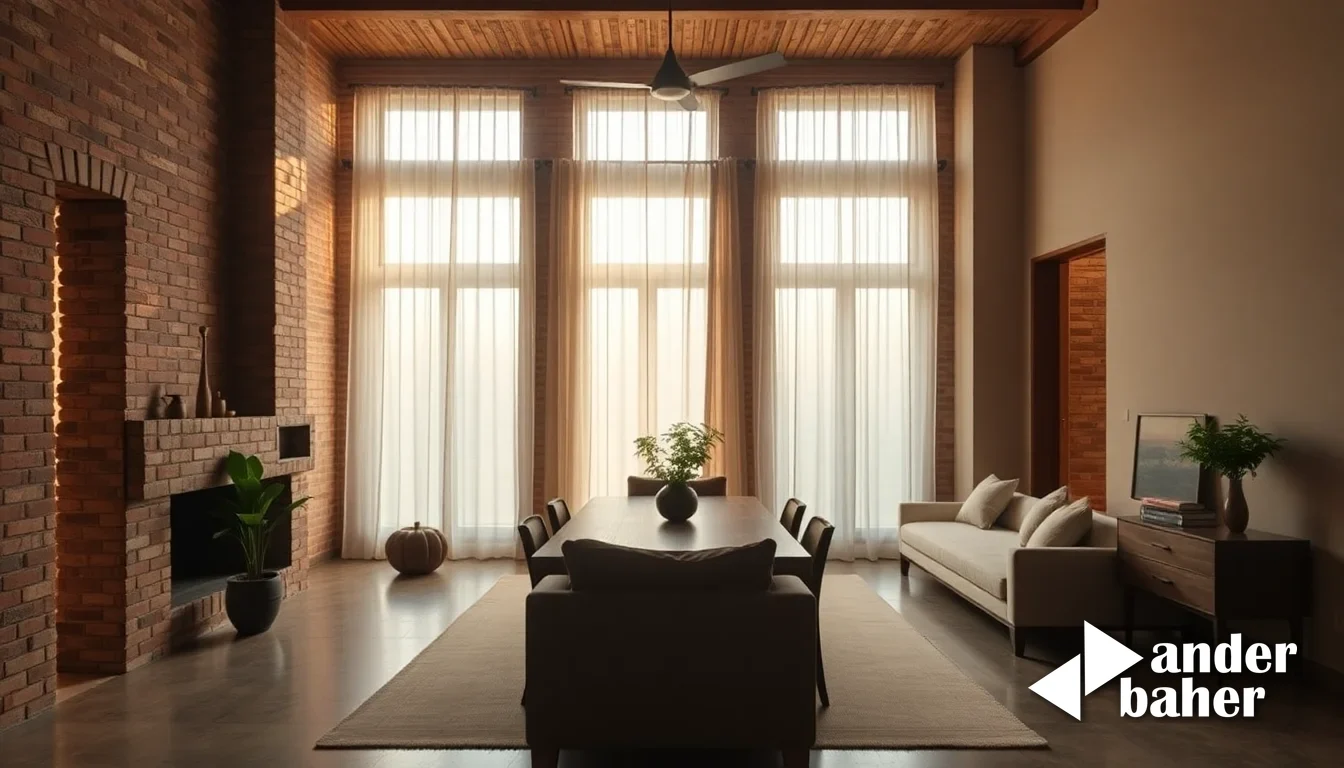
There is a particular honesty in a brick that has already lived. Its surface carries the weathering of decades—scorch marks from kilns long closed, lime mortar from demolished colonial warehouses, the fingerprints of masons from another era. When we reach for such materials in contemporary Indian homes, we are not simply choosing aesthetic texture; we are inviting a form of temporal authenticity into rooms built for now.
The impulse is quietly gathering momentum. Across newly-completed high-rises in Bengaluru—from the glass-walled towers rising over Devanahalli to the just-handed-over residences on Sarjapur Road—a small but discerning cohort of owners and designers is turning away from the builder-vanilla brick veneer. They are instead sourcing reclaimed clay brick salvaged from demolished colonial structures, old industrial compounds and heritage workshops. The effect is neither pastiche nor nostalgia. It is restraint: a single accent wall, a kitchen threshold, a feature chimney breast rendered in brick whose ochre and rust tones seem to breathe with the memory of their making.
Why Reclaimed Brick Reads Differently in Indian Interiors
Reclaimed brick carries a narrative that new production brick—even the finest contemporary clay—simply cannot mimic. Its surface irregularity, the variation in firing across a batch, the ash deposits and colour shifts that mark genuine age: these are the fingerprints of handcraft, of kilns that no longer exist.
In Indian domestic architecture, brick has never been secondary. From the warm terracotta of colonial Bengaluru bungalows to the sculptural jali work of older Mumbai row-houses, clay brick has anchored spaces with both materiality and cultural continuity. A contemporary owner in a new-possession apartment—confronting the developer's standard gypsum finishes and synthetic veneers—often feels a subtle hunger for something with weight, age and place-specificity. Reclaimed brick answers that without requiring historical pastiche.
The material logic is equally compelling. A reclaimed clay brick has already proven its durability across decades of weather exposure, monsoon moisture and thermal cycling. Its porosity and density are calibrated by time, not just specification. For homeowners in Mumbai confronting chronic balcony dampness and water seepage—the scourge of older luxury developments in Worli, Bandra East and Lower Parel—the proven moisture-management profile of aged brick offers both practical and psychological reassurance.
How to Integrate Reclaimed Brick into a High-Rise Apartment
Scale and restraint are essential. Unlike a ground-level bungalow, a newly-completed tower apartment in Whitefield or Electronic City has no foundation mythology demanding raw brick expression. Instead, reclaimed brick works best as a considered threshold: an accent wall behind a bed, a kitchen island edge, a material gesture that says intention rather than aesthetic statement.
The sourcing itself requires attention. Genuine reclaimed brick from heritage Bengaluru structures—old mills, colonial administrative quarters, demolished workshops in areas like Sampangiramanagara and Domlur—demands relationships with salvage merchants, heritage demolition contractors, and materials brokers. Ander Baher's integrated interior and landscape practice draws on established networks across both cities to source ethically salvaged stock, ensuring provenance and structural integrity before specification.
Integration with contemporary interiors is subtle. Reclaimed brick pairs with—rather than fights—minimalist joinery, polished concrete, and restrained colour palettes. A single brick feature wall in a 3 BHK apartment at a development like Mana Dale (Sarjapura) or Lodha Bellissimo (Mahalaxmi) becomes a quiet anchor, preventing the space from feeling temporally homeless, without forcing heritage narratives where they do not belong.
Sourcing and Specification: What to Expect
Reclaimed brick is not commodity material. Costs reflect sourcing labour, cleaning, grading and structural verification—factors that vary seasonally with demolition activity in each city. A single accent wall (40–60 sq.ft.) typically requires 6–8 weeks lead time, including salvage acquisition and mason training. Not all masons are comfortable working with material whose dimensions and bond patterns vary; the installation becomes as much craft as specification.
Moisture profile matters, particularly in Mumbai. Before specification, reclaimed brick should undergo basic capillary and permeability testing—especially for any application near an external wall, balcony or kitchen zone prone to water exposure. The paradox is instructive: the age that makes reclaimed brick beautiful also requires rigorous contemporary verification.
Durability, once verified, is typically 50+ years in interior applications—far exceeding most contemporary finish materials. The cost argument, therefore, is not about lower price but about longevity and the diminishing embodied energy footprint across that lifespan.
The Subtle Shift Towards Material Honesty
What reclaimed brick represents, ultimately, is a quiet rebellion against the disposability baked into most contemporary apartment interiors. The builder hands over a box; the owner fills it with finishes designed to last 8–10 years before fatigue sets in. Reclaimed brick suggests an alternative: that materials can age visibly, that imperfection and temporal layering are not flaws but evidence of intentionality.
This is not about romanticising the past. It is about recognising that in a city like Bengaluru—where the pace of demolition and construction often erases place-memory within a single decade—bringing salvaged material into a new home is an act of material continuity. The brick you specify today carries the making-knowledge of craftspeople now gone. Its presence in your space is neither nostalgic nor sentimental; it is simply true.
For owners in newly-completed towers across Kudlu Gate, Hoskote, or the just-handed-over developments dotting Old Madras Road, the question becomes: how do you inhabit a new space with authenticity? Reclaimed brick offers one answer—not as aesthetic rescue, but as a deliberate choice to inherit and extend the material culture you have inherited. Explore how material intentionality shapes our delivered spaces, or speak with the studio about sourcing and specification for your project.
Sources & further reading
- Dezeen — Glen-Gery clads Princeton University health centre in bricks made with reclaimed materials ↗
- ArchDaily — Process as Practice: Building with Reclaimed Materials on Tarkwa Bay, Lagos ↗
- Dezeen — Karimoku New Standard and ASICS create furniture made from crushed trainers ↗
- designboom — temporary pleasure: john leo gillen on growing up in a nightclub ↗
An original Ander Baher perspective, informed by the coverage above.
Frequently asked
Where do you source reclaimed brick in Bengaluru and Mumbai?
We work with established heritage salvage contractors and demolition networks across both cities, prioritising ethically salvaged stock from colonial structures, old industrial sites and heritage workshops. Sourcing typically requires 6–8 weeks and includes structural verification before specification.
How much does reclaimed brick cost compared to new brick?
Reclaimed brick costs reflect sourcing labour, cleaning and verification—typically 3–4x new production brick per unit. The investment is justified by durability (50+ years in interior applications), embodied carbon savings, and the temporal authenticity it brings to a space.
Is reclaimed brick suitable for balconies and wet zones in Mumbai apartments?
Yes, with verification. Aged brick has proven moisture-management properties, but any application near external walls or water exposure requires capillary and permeability testing before specification to ensure performance across monsoon cycles and chronic dampness scenarios.
How do you integrate reclaimed brick into a modern high-rise apartment without it looking dated?
Restraint and contextual placement are essential. Reclaimed brick works best as a considered accent—a feature wall, kitchen threshold, or material gesture—paired with minimalist joinery and restrained colour palettes, rather than as comprehensive cladding.
Ready to transform your space — inside or out?
Tell us a little about your home or office. We'll get back within one working day.
Book a consultation