
Magazine › Interiors
When Walls Breathe: The Jali's Quiet Return to Modern Indian Homes
The brick jali is no longer decoration—it has become a conversation between light, privacy, and the spaces we inhabit.
By the Ander Baher Editorial Desk · 26 September 2026
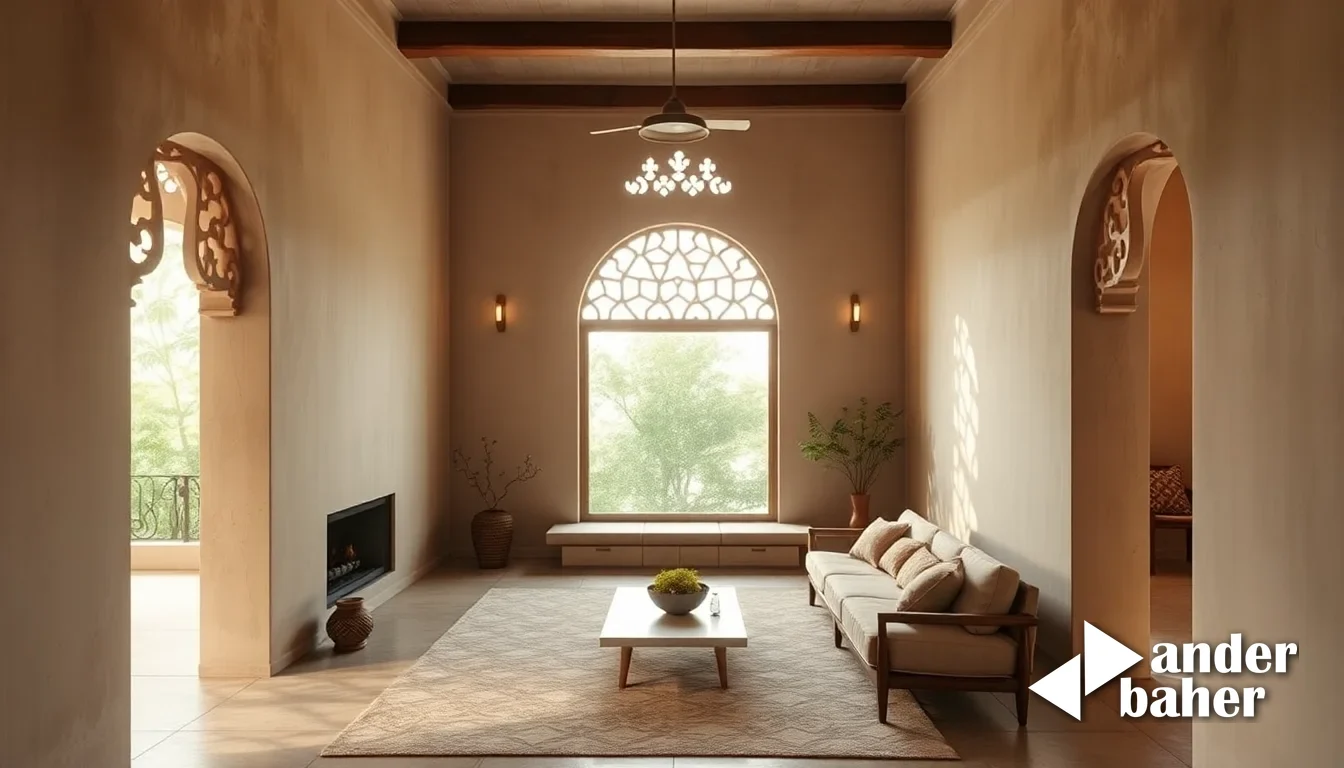
Walk into a home where afternoon sun arrives not as glare but as shadow-play. Where walls, rather than blocking light, orchestrate it. This is what happens when the jali—that ancient carved screen that once defined Indian palaces, temples, and havelis—steps back into contemporary living rooms, bedrooms, and corridors, no longer as nostalgic pastiche but as a genuine solution to how we want to live.
The jali's resurgence is not about revival for its own sake. It is about recognising that a solid wall is often the wrong answer. In Indian homes, particularly in cities like Bangalore where heat builds relentlessly, or Mumbai where humidity hangs thick, the jali offers something that glass does not: it filters without creating the thermal drag of traditional barriers. More importantly, it respects a quiet cultural truth—that in Indian domestic life, the boundary between rooms, between inside and semi-outside, has always been permeable.
The Grammar of Brick and Shadow
Brick jalis work differently than their stone or marble ancestors. The material itself—warm, rough, slightly porous—catches light in a way that feels alive. A geometric pattern cast in clay is not inert decoration; it becomes a surface that breathes with the sun's movement. At dawn, the shadows fall one way. By noon, they have redrawn the entire room. By evening, the wall seems to dissolve into warmth.
This is why contemporary architects and designers are choosing brick jalis for spaces that need both connection and separation. Between a kitchen and living area. Along a corridor that needs natural light but also visual quiet. In bedrooms where privacy matters but so does ventilation. The jali doesn't apologise for being what it is—it doesn't pretend to be a door, or try to disappear like frameless glass.
A Conversation, Not a Barrier
What makes the jali particularly suited to modern Indian homes is its honesty about domestic life. A family does not exist in sealed rooms. Sound travels, light matters, air must move. The jali acknowledges all of this. It is not a wall pretending to be open, or an opening trying to be private. It is a third thing—a membrane.
In homes across Bangalore's emerging design districts and Mumbai's converted colonial apartments, the jali is being reinterpreted without irony. Some are cast in clay, others in concrete, a few in reclaimed brick salvaged from heritage structures. The pattern might reference traditional geometry or take a more abstracted form. What matters is the principle: structure as light-maker, material as storyteller, craft as something that should remain visible in how we build.
Living with Pattern and Patience
Installing a brick jali wall requires a different temperament than ordering a partition or painting drywall. There is craft involved. There is waiting for mortar to cure, understanding how light will actually behave in your specific home across seasons. There is accepting that the pattern will cast different shadows in winter than in summer, and that this variation is the point.
For those building or renovating, the jali wall is worth considering not as a decorative element but as infrastructure—as a way of thinking about how spaces connect, how light enters, how a home acknowledges both Indian climate and Indian sensibilities about living together. It is a reminder that sometimes the oldest solutions are not nostalgic. They are practical. They are waiting to be used again.
Sources & further reading
- ArchDaily — Light Through the Wall: Indian House Interiors Shaped by Brick Jali ↗
- ArchDaily — Panorama House / Studio B Architecture + Interiors ↗
- Dezeen — Nine dynamic surfaces that give interiors eye-catching backgrounds ↗
- Dezeen — London home renovation by Polysmiths uses "light as the primary material" ↗
An original Ander Baher perspective, informed by the coverage above.
Ready to transform your space — inside or out?
Tell us a little about your home or office. We'll get back within one working day.
Book a consultation