
Magazine › Interiors
What Global Design Awards Reveal About the Future of Indian Interiors
Global design recognition shifts toward restraint, materiality and climate-responsive living. What does this mean for your newly-handed-over Bengaluru or Mumbai apartment?
By the Ander Baher Editorial Desk · 11 November 2026
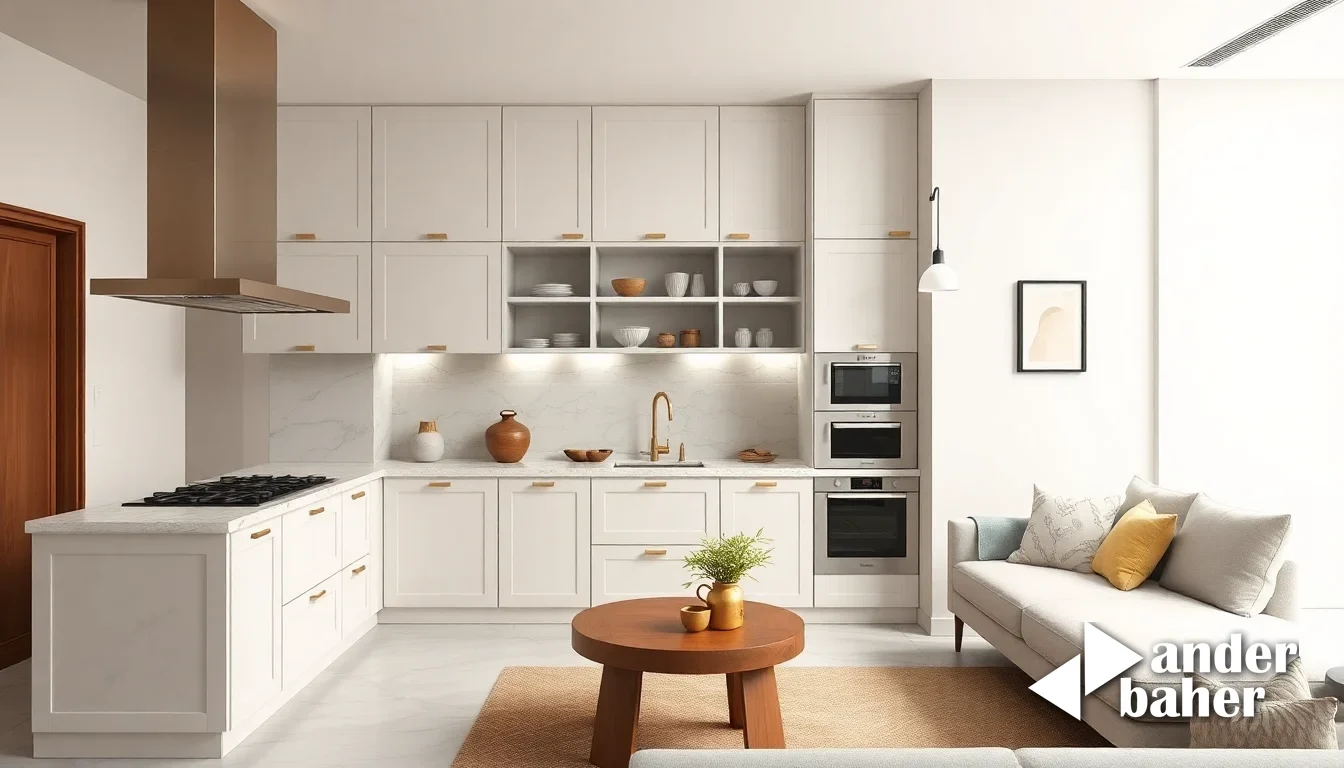
Each year, international design awards reveal a quiet consensus about what matters. This year's global recognition — from the Shaw Contract Design Awards and their peers — points to a decisive shift: away from novelty and spectacle, toward spaces that whisper rather than shout. Restraint. Honest materials. Climate as a design partner, not an afterthought. For those stepping into a newly-completed high-rise in Whitefield or settling into a refurbished Worli apartment, this global momentum carries a very local relevance.
The interiors gaining international attention share a common thread: they are spaces designed for living with intention, not for Instagram. They prioritise tactile depth — raw concrete, weathered timber, unadorned stone — over applied ornament. They embrace the seasons. They let silence and empty space do the work of luxury. And they reflect a growing worldview that a home's true measure is not how dramatically it announces itself, but how gracefully it accommodates the rhythms of the people within it.
For Indian homeowners, especially those inheriting builder-vanilla finishes in towers across Bengaluru and Mumbai, this represents both permission and provocation. Permission to reject the mall-like maximalism that ruled the 2010s. Provocation to ask: What does this apartment actually need to be beautiful and livable?
The Return to Material Honesty in Indian Homes
Global award-winning interiors no longer mask their bones. A concrete slab remains a concrete slab—but it is treated with respect: sealed, lit carefully, sometimes left raw. A brick wall stays a brick wall. Timber is allowed to age and change. This is not about austerity for its own sake. It is about respect for what is real.
In a just-handed-over tower off Sarjapur Road or a renovation in Lower Parel, this philosophy demands a different conversation with your designer. Rather than, "How do we hide this wall?" the question becomes, "What does this wall want to be?" Does that structural column become a feature? Can the concrete soffit above the kitchen stay exposed, anchoring the space with tectonic honesty? A plaster finish that mimics something else is now seen as a kind of falsehood—whereas the real material, understood and celebrated, reads as confidence.
Ander Baher's approach to interiors begins here: not with a mood board or a colour palette, but with the actual building and its climate. What light does this room receive? How does the monsoon move around this balcony? What is the thermal load on this south-facing façade? Only when those questions are answered does the palette emerge—not imposed, but discovered.
How do award-winning designers approach climate in contemporary interiors?
Smart climate integration is no longer a side concern; it is central to how a space feels and functions. This means layered screening (jali patterns, wooden shutters, fabric tensioning), strategic glazing depth, thermal mass via exposed concrete or stone, and strategic ventilation that works with the season rather than against it through brute-force air conditioning.
Bengaluru's harsh southern summer and Mumbai's annual monsoon assault are not design liabilities—they are the design brief. A balcony in a high-rise in Chandapura or Powai cannot simply be a recessed afterthought. It must actively shape how light enters the living zones, how air moves, where you stand when you want to feel the season without being battered by it. This requires coordination between interior spatial planning and landscape/threshold design—precisely why the integration of Ander and Baher, interiors and landscape, matters.
Award-winning interiors increasingly show this thinking: a deep overhang that provides afternoon shade in summer but lets low winter sun penetrate. A water-responsive courtyard or terrace that moderates microclimate. Timber screens that filter light without fully blocking it. These are not trendy extras. They are the architectural skeleton of comfort.
Restraint as Luxury: Why Less is Now the Standard
Perhaps the most striking pattern in globally celebrated interiors is the embrace of emptiness. Not emptiness as neglect, but as intentional space—breathing room, visual quiet, the psychological ease of an uncluttered field of vision. A room with one perfectly-considered object reads as wealthier than a room with twelve.
This is a radical idea in Indian domestic design, where abundance and maximalism have long signalled prosperity. But in the towers rising over Hennur or in the renovations reshaping Byculla, a new affluent homeowner is beginning to ask: Do I actually need all of this? And the answer, increasingly, is no. What you do need: quality. Intention. A single wooden bench that is exquisite. A textile that tells a story. A wall left blank so that light itself becomes the décor.
This shift also reflects something psychological: in high-density urban living—whether in Whitefield's glass towers or Mahalaxmi's high-rises—the craving is for simplicity, not surplus. The mind that has negotiated traffic, notifications and noise all day does not arrive home wanting more stimulation. It arrives wanting peace.
Materiality, Craftsmanship, and the Indian Maker
A quiet but powerful thread in award-winning interiors this year is the visible hand of the maker. Handplaned wood. Visible joinery. Tiles that show glaze variation. Concrete that bears the marks of formwork. This is not "rustic" or nostalgic—it is contemporary craft. And it opens a genuine opportunity for Indian interiors, where access to skilled craftspeople remains a real competitive advantage.
A newly-completed apartment in J.P. Nagar or a refurbished space in Prabhadevi need not look "global" to be globally relevant. It can look locally made—and be more interesting for it. That means engaging with local timber, local stone, local artisans whose hands have memory in them. A brass jali screen made by a Bengaluru craftsman carries authenticity no CNC machine can replicate. Terrazzo tiles made to order in a small Mumbai workshop outthink mass-produced imports.
This is not nostalgia disguised as design. It is recognition that place has returned as a value. And your home's sense of place comes not from wall murals of destinations you aspire to, but from the genuine materials and makers of where you actually live.
The New Contract Between Interior and Landscape
The most sophisticated interiors globally are no longer box-bound. They leak into thresholds, terraces and outdoor rooms. A balcony is not a separate problem; it is the continuation of the interior's philosophy. A courtyard is not a luxury—it is an extension of the living system. This is why the integration of interior and landscape design is not a marketing concept, but a practical necessity.
In a Chambenahalli high-rise or a Lower Parel renovation, this means: before you choose a paint colour, you plan how your balcony receives morning light. Before you specify flooring material inside, you consider whether that same stone or wood can extend outside, collapsing the visual boundary. Before you arrange furniture, you ask whether the outdoor threshold should be dressed with planting, or left as pure geometry, or layered with both.
This is the integration we champion: the interior designer and landscape architect not as separate vendors, but as partners asking: How does this space want to live?
The global award-winning interiors of 2026 are teaching Indian homeowners a quieter ambition: that beauty is not about shock, novelty or exhaustive detail. It is about clarity. It is about allowing the actual light, material and climate of your place to set the terms. It is about trusting that a room that is honest, materially rich and climatically responsive will, in time, feel not just beautiful, but true. Bring intention to your threshold—explore our delivered spaces across Bengaluru and Mumbai, or receive a free AI design concept in under a minute to see how this philosophy translates to your newly-handed-over apartment or renovation project.
Sources & further reading
- Dezeen — Shaw Contract Design Awards name top interiors of 2026 ↗
- Dezeen — Dezeen Awards-shortlisted housing project damaged in fire ↗
- ArchDaily — Sharjah Architecture Triennial 2026 ↗
- Dezeen — Dezeen Awards trophy updated using "one of humanity's oldest natural materials" ↗
An original Ander Baher perspective, informed by the coverage above.
Frequently asked
What makes an interior design award-winning in 2026?
Global recognition now favours restraint, honest materials, climate-responsive strategies and visible craftsmanship over novelty or applied ornament. Spaces that prioritise livability and tactile depth over spectacle are setting the standard.
How do I apply award-winning interior design principles to my new Bengaluru or Mumbai apartment?
Begin by understanding your building's climate, light, and materiality. Ask your designer to work with your site's actual conditions—not against them. Choose fewer, higher-quality materials; integrate your balcony or terrace as a continuation of interior philosophy, not an afterthought.
Should I hide or expose concrete walls in my new high-rise apartment?
Contemporary award-winning interiors celebrate honest concrete. Expose it, treat it with care—seal it thoughtfully, light it strategically—rather than masking it. Exposed structure now signals confidence and material integrity.
How does climate-responsive design work in a Mumbai monsoon or Bengaluru summer apartment?
Integrate layered screening (jali, wooden shutters), deep overhangs that vary with the season, thermal mass via materials, and strategic ventilation. Your balcony and threshold should actively moderate light and air—not just provide recessed space.
Ready to transform your space — inside or out?
Tell us a little about your home or office. We'll get back within one working day.
Book a consultation