
Magazine › Interiors
From Industrial Waste to Living Craft: Rethinking Materials in Indian Interiors
How industrial byproducts are reshaping premium interiors in Bengaluru and Mumbai. A new generation of designers transforms manufacturing waste into intentional, tactile surfaces for the contemporary Indian home.
By the Ander Baher Editorial Desk · 22 October 2026
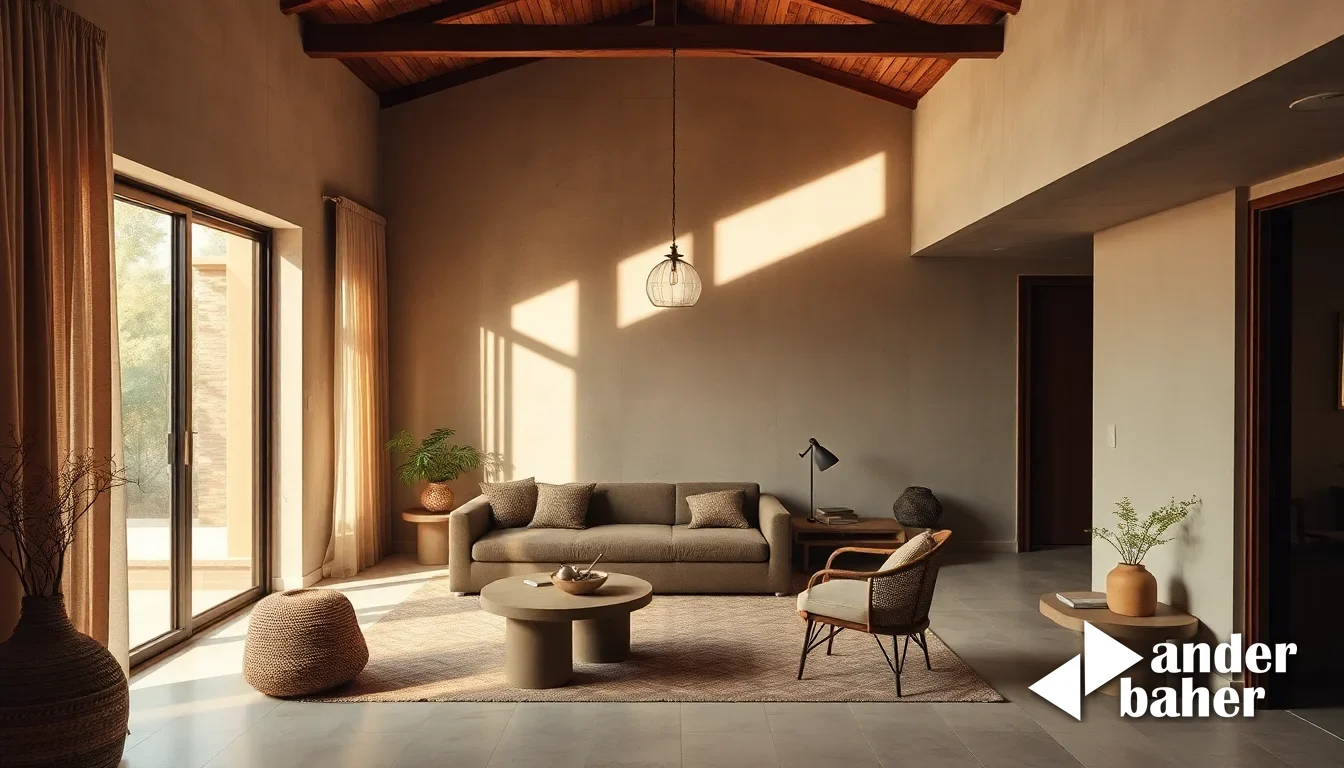
There is a quiet revolution unfolding in how we think about material waste in the home. For decades, the byproducts of industrial manufacturing—the ash, the oxidised sediment, the discarded minerals that accumulate in factory yards—have been landfilled or burned. A new generation of material researchers and ceramicists are asking a different question: what if this waste became the origin of something beautiful?
The impulse speaks directly to the Indian context. Our cities are growing vertically and fast. In Bengaluru's newly-completed towers rising over Whitefield and Sarjapur Road, in Mumbai's just-handed-over high-rises in Worli and Lower Parel, the possession moment arrives with a paradox: the interiors are clean, but often generic. Builders deliver vanilla plasterboard and neutral paint. The homeowner faces a blank canvas—and a sprawling ecosystem of vendors, each with their own aesthetic agenda. What's missing is a unifying material language. One that feels intentional, rooted, and honest about where it comes from.
Industrial byproducts—particularly the oxides and residues from metal manufacturing—carry an inherent narrative. They are not raw materials pulled from the earth. They are *transformed* materials: the shadows left behind when something else was made. When a ceramicist works with these substances, they are not erasing that history. They are deepening it, asking the clay to remember the factory, the forge, the kiln.
Why Industrial Materials Matter in Premium Indian Homes
The homeowner renovating a three-bedroom in Bengaluru's Domlur or a south-facing apartment in Bandra East faces a familiar friction: imported finishes feel rootless; mass-produced Indian tiles feel thin. There is rarely a middle path—a material that speaks to craft without nostalgia, sustainability without preaching, and texture without excess.
Industrial-waste ceramics sit in that space precisely. They arrive with an ethical weight (the byproduct of something already manufactured, now given purpose). They offer visual warmth (rust reds, ochre, subtle metallic undertones that shift in different light). And they demand restraint from the designer: these materials do not welcome clutter. They ask for silence around them.
Consider a just-handed-over apartment in a premium Bengaluru development like Assetz Sublime or Casa Grand Estancia. The builder has left you with 3,000 square feet of blank walls. The instinct is often to fill: wallpaper, bold paint, heavy joinery. But what if instead you introduced a single feature wall or threshold lined with ceramics made from recycled industrial material? The texture absorbs sound. The colour deepens with age. The material itself tells a story—not a nostalgic one, but a forward-looking one about what we do with what we leave behind.
Material Intelligence: Translating Industrial Byproducts into Liveable Interiors
The process of transforming industrial waste into usable ceramic forms requires both scientific precision and artistic intuition. Oxides and mineral residues carry different firing temperatures, shrinkage rates, and colour profiles than virgin clay. A designer working with these materials must understand chemistry as much as aesthetics.
In an Indian home context, this precision becomes a hidden luxury. A handcrafted tile or vessel made from upcycled industrial material will not feel identical to its neighbour—slight variations in tone, micro-texture variations, minute asymmetries. In a Worli loft or a Whitefield apartment where the architecture is already clean and volumetric, these micro-differences become visual anchors. They soften the precision of the building itself.
The material also performs practically. Ceramic produced from industrial byproducts tends to have a tighter, denser fired body than softer terrestrial clays—meaning better water resistance, greater durability underfoot, and slower staining. For a Mumbai home where monsoon humidity and salt air are constants, or a Bengaluru apartment where dust and dry seasons test surface finishes, this density matters. It is performance wrapped in beauty.
From Threshold to Hearth: Where to Introduce These Materials
The most sophisticated use of industrial-waste ceramics in Indian interiors is restrained. They work best at transitional moments: a threshold between the entry and living area, a single accent wall in a primary bedroom, the surround of a fireplace (if your home has one), or the rear wall of open shelving in a kitchen. In a newly-completed tower off Sarjapur Main Road or an established address in Koramangala, even one considered introduction of this material anchors the entire spatial language.
Bathrooms offer another opportunity—particularly in older renovations in Mumbai or established Bengaluru addresses where traditional tile work is already a given. Replace a standard border or accent field with handcrafted ceramics from recycled material, and the bathroom transforms from utilitarian to contemplative.
The subtlest integration is underfoot. A few handmade tiles worked into a larger neutral field create rhythm without announcing themselves. A visitor notices something is different about the space—its warmth, its intentionality—before they consciously register the material itself.
How do you source industrial-waste ceramics for an Indian home?
Most industrial-waste ceramics are still produced by independent studios and small makers, not mass manufacturers. This means sourcing requires direct relationship-building: studio visits, bespoke commissions, or partnerships with design practices that maintain these relationships. At Ander Baher—our integrated interior and landscape studio in Bengaluru and Mumbai—we work with regional ceramicists and material innovators to specify these pieces for clients, ensuring both aesthetic coherence and practical performance across your home.
The lead time is longer than ordering standard tiles. But the trade-off is intentionality. You are not buying something off-the-shelf; you are commissioning material that responds to your space, your light, your climate, and your values.
Bringing industrial-waste ceramics into your home is an act of layered thinking. You are making a choice about labour (supporting independent makers over industrial production). You are making a choice about narrative (letting your walls speak about transformation, not extraction). And you are making a choice about time—accepting that the most durable, beautiful interiors are built slowly, through relationship and intention. Explore our delivered spaces to see how material restraint shapes living, or speak with our studio about introducing thoughtful, upcycled materials into your next interior.
Sources & further reading
- designboom — studio thusthat turns the rusty-red waste of aluminum production into delicate ceramics ↗
- ArchDaily — 7th door Hangzhou Restaurant / Chakchak Studio ↗
- ArchDaily — Poliedro I House / Volume Architecture Lisbon Studio ↗
- ArchDaily — Campus du Parc / IT'S Studio ↗
An original Ander Baher perspective, informed by the coverage above.
Frequently asked
Are ceramics made from industrial waste durable for kitchen counters and bathroom walls in Indian homes?
Yes. Industrial-byproduct ceramics typically fire to a denser, more water-resistant body than standard earthenware, making them well-suited to high-moisture Indian bathrooms and kitchen backsplashes—especially in monsoon-prone Mumbai or humid Bengaluru. Lead times and costs are higher than mass-produced tiles, but durability and stain resistance are superior.
How much does it cost to specify handcrafted industrial-waste ceramics in a Bengaluru or Mumbai apartment renovation?
Pricing is bespoke and depends on scale (feature wall vs. full bathroom), maker, and customisation. Budget qualitatively for 2–3× the cost of standard decorative tiles, but substantially less than imported artisanal ceramics. A single accent wall in a just-handed-over apartment typically requires a modest commission; discuss specifics during a studio consultation.
Can I mix industrial-waste ceramics with standard finishes in a small Mumbai flat or Bengaluru apartment?
Absolutely. Restraint is essential—introduce these materials at one key threshold or accent to avoid visual cacophony. In a 2–3 bedroom, a single feature wall or threshold surround creates impact without overwhelming. The material works best against neutral backgrounds and clean architecture.
How do you specify industrial-waste ceramics with a landscape or outdoor design?
Indoor ceramics can transition to outdoor thresholds (covered verandahs, protected balconies). Outdoor use is limited unless the material is specifically formulated for freeze-thaw cycles. Our Ander + Baher integrated practice designs material continuity between interior and exterior—explore how at a consultation.
Ready to transform your space — inside or out?
Tell us a little about your home or office. We'll get back within one working day.
Book a consultation