
Magazine › Interiors
Reading Rooms & Shared Thresholds: Designing Libraries Within Indian Homes
How to craft a purposeful reading space that anchors daily life in Bengaluru and Mumbai homes—blending privacy, shared ritual and the texture of print.
By the Ander Baher Editorial Desk · 6 November 2026
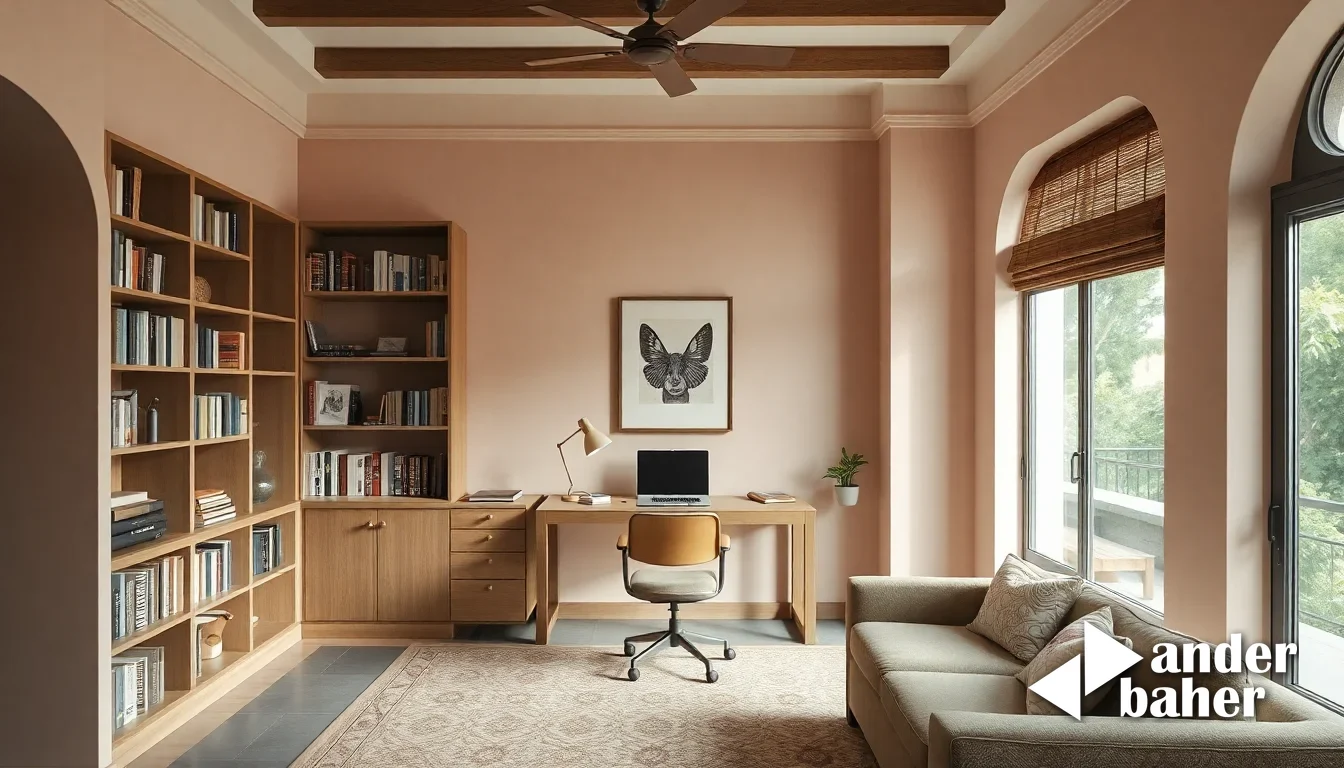
The library—as a social anchor, not just a storage room—has retreated from Indian homes over two decades. Where mid-century flats in places like Domlur and Byculla once held dedicated reading alcoves with tall windows and careful light, today's high-rises in Whitefield and Lower Parel arrive as open-plan shells: all transparency and flow, little threshold, less repose.
Yet something quieter is stirring. Owners of newly-handed-over towers in Sarjapura and Worli are asking not how to hide their books, but how to anchor them—to make a room that holds both solitude and conversation, that says something about how they live. A home library is no longer a luxury. It is a corrective. It is a threshold.
Why Reading Needs Its Own Room
A library within a home is not a decorator's flourish. It is an act of resistance against the momentum of the screen, against the assumption that all space must be multi-use, that every corner must apologize for itself.
In a Bengaluru apartment—whether in the glass towers rising over Hebbal or in an established bungalow in Jayanagar—a dedicated reading room draws a line. It says: this is where attention lives. This is where the phone quiets. The room itself enforces the contract. Good architecture makes intention visible.
A library also redistributes light and air through the home. A deep bookshelf wall becomes a thermal buffer in summer. A reading nook tucked into a northern bay catches morning sun without glare. In Mumbai's monsoon-heavy months, a room lined with paper and timber shifts the humidity gradient subtly. The library breathes with the season, and the home feels it.
Threshold Design: How to Frame a Reading Space in a High-Rise
The most overlooked decision in apartment interiors is the threshold itself—the moment you step from one room into another. In newly-completed towers in Powai or Kudlu Gate, open-plan layouts have erased these moments. The result is spatial exhaustion: nowhere feels distinct, so nowhere feels restful.
A home library recovers this. The threshold need not be a door (though it might be). A change in floor material—timber where the living room is polished concrete—signals arrival. A narrowing of the aperture; a ceiling that drops by 30 centimeters; a wall of shelving that frames the entry—these are honest transitions. They cost nothing in square footage but yield immense spatial clarity.
In a Sarjapura apartment of 2,000 square feet, a 120-square-foot library corner becomes the most valued room. In a Mumbai flat in Bandra East or Mahalaxmi, a 10-foot-wide nook reads as a full sanctuary because the threshold makes it so. The architecture of arrival—not the area—is what counts.
How do you design a reading room for monsoon-prone Mumbai balconies and high-rise apartments?
Monsoon dampness—seeping through balcony screens, condensing on north-facing windows—is the silent enemy of paper and binding. A library positioned away from external walls solves half the problem; orienting it to eastern or western light solves the rest.
If your reading space must touch a balcony or exterior wall (common in high-rises across Lower Parel or Worli), layer your defenses: a sealed timber batten screen filters monsoon spray; interior-facing plasterboard creates an air cavity that buffers humidity; shelving is set back 12 inches from the wall to allow air circulation behind the spines. In Bengaluru, where summer heat is relentless, the same air gap prevents the afternoon sun from baking the book blocks and warping the covers.
Material matters. Open shelving in solid teak—which we favour for our integrated interior and landscape projects—ages with dignity and doesn't rot. Painted MDF or particleboard absorbs moisture and swells. Over fifteen years in a Mumbai flat or a Bengaluru high-rise, the material choice becomes invisible or catastrophic, depending.
Lighting a Library: Daylight as the Core Discipline
Most home libraries fail because they are lit like offices: flat, shadowless, exhausting. The reading room should be lit like the human eye wants to read—with a pool of warm task light over the chair, ambient glow from the shelves, and the possibility of daylight.
In a Whitefield apartment, position the reading chair perpendicular to the window so morning sun grazes the page without glare. North-facing light in Mumbai—steady, cool—is ideal. If your library borders a western exposure in a Hennur or Devanahalli development, use a timber jali or linen-lined screen to filter the afternoon heat while maintaining the sense of sky.
Artificial light should layer: ambient illumination from cove lights above the shelves (colour temperature 2700K, which is warm amber); task light at arm's height over the reading chair; and a small accent light on a side table to draw the eye inward. The room glows, rather than glares. The book is readable; the space remains calm.
Materiality: The Texture of Permanence
A library is a declaration of taste, and taste lives in material. In newly-completed towers across Bengaluru and Mumbai, builder-grade interiors arrive vanilla and glossy. A library corrects this with texture.
Solid wood shelving—not veneer—ages visibly and beautifully. Plastered walls in a warm earth tone create acoustic depth and feel grounded. A timber floor, even a single room, anchors the library within the wider apartment. Linen curtains filter light and absorb sound. Cast plaster or concrete shelving—an idea worth exploring in a Sarjapura or Bandra East apartment—carries a sense of permanence that floating MDF cannot.
The library is where materials are allowed to age. Fingerprints on the bookshelf, sun fade on the linen, dust in the corner—these are not failures. They are evidence of use, of a life lived in intention.
The Social Dimension: A Room That Holds Conversation Too
The finest home libraries are not silent vaults. They are social rooms. A low sofa or two upholstered chairs facing each other across a small table—this invites a visitor to sit, to discuss a passage, to linger. In a Worli apartment or a Kogilu bungalow, the reading room becomes the place where real conversation happens, away from the kitchen din and the television glow of the living room.
A small tea service on a side shelf, perhaps a low timber table for setting down a cup—these are architecture's way of saying: stay. The library becomes a threshold between solitude and connection, a room that serves both without apology.
The home library is an old idea in a new form. Not a museum of books, but a room where attention settles, where light and silence and paper conspire to slow time. In the glass-walled towers of Powai and Devanahalli, in the dense streets of Jayanagar and Altamount Road, this threshold—this deliberate room—has never felt more necessary. Bring intention to the threshold. Explore our delivered spaces to see how we anchor reading rooms within Indian homes, or conceptualize your library with our AI design tool in under a minute.
Sources & further reading
- Dezeen — Library by Collective Architecture breathes new life into Scottish high street ↗
- Dezeen — Perrier-Jouët and Iris van Herpen partnership celebrates “biological processes that shape life” ↗
- designboom — hurricane-proof polycarbonate wraps resilient 24-hour public library in miami ↗
- Dezeen — Studio Shea designs South Carolina library as "community living room" ↗
An original Ander Baher perspective, informed by the coverage above.
Frequently asked
How much space do you need for a functional home library in a Bengaluru apartment?
A dedicated library can thrive in as little as 80–120 square feet. The threshold and material quality matter more than area; a well-designed reading nook feels larger than its dimensions.
What's the best way to protect books from monsoon dampness in a Mumbai high-rise?
Position shelving away from external walls, use timber batten screens to filter balcony spray, and create a 12-inch air cavity behind shelves so humidity can circulate. Solid wood shelving resists moisture better than particleboard.
Should a home library have a door, or can it be an open nook?
A door is not necessary; a threshold works best—a change in floor level, material, or a framing wall makes the room feel distinct without closing it off. In a Whitefield or Bandra apartment, this distinction is often more valuable than privacy.
What lighting colour temperature works best for reading in an Indian home?
Warm amber light at 2700K is ideal for reading and rest. Combine task lighting over the chair with ambient cove light on the shelves to avoid glare and create a calm, graduated glow.
Ready to transform your space — inside or out?
Tell us a little about your home or office. We'll get back within one working day.
Book a consultation