
Magazine › Interiors
When Global Design Conversations Meet the Indian Home
International design movements offer inspiration, but the real dialogue happens when we translate them through the lens of our own climate, craft, and living culture.
By the Ander Baher Editorial Desk · 19 September 2026
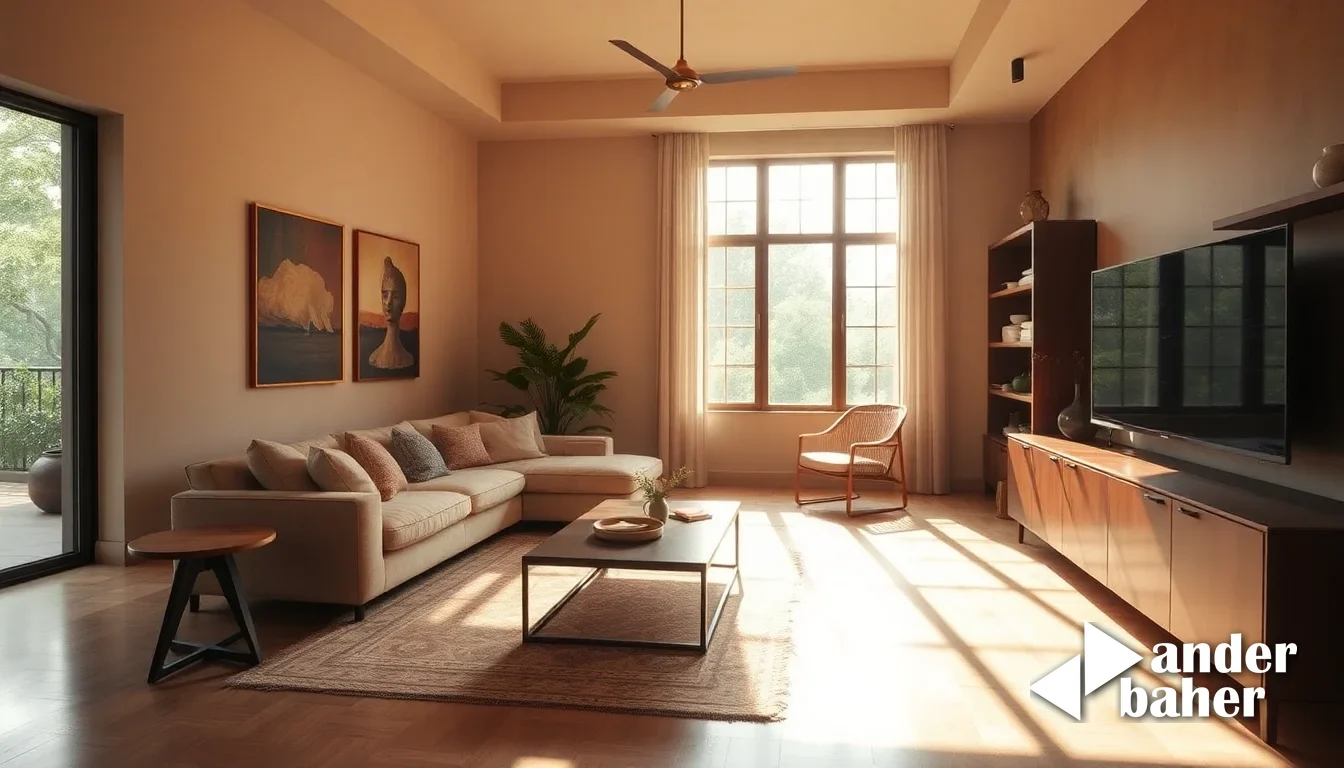
Every autumn, design capitals of the world gather to celebrate ideas. Across oceans, curators, makers, and thinkers showcase work that speaks to urgent questions: how do we live better? What does sustainability mean in practice? How do materials tell stories? These conversations matter—not because we must follow them, but because they remind us that the fundamental questions about inhabitation are universal.
Yet something shifts when a London studio's minimalist gesture, or a Copenhagen approach to modularity, lands in an Indian home. The humidity of Bangalore, the monsoon intensity of Mumbai, the dust of Delhi, family structures that span generations under one roof, the relationship between kitchen and courtyard—these are not constraints to work around. They are the actual brief.
Translation Over Imitation
The homes we see celebrated internationally often emerge from specific conditions: regulated climates, solitary occupancy, industrial supply chains, and a particular aesthetic of restraint. When an Indian designer or homeowner looks at these works, the instinct is sometimes to replicate the image. A steel staircase becomes steel; a white room becomes white. The form arrives intact, but the living does not.
Real translation is harder. It means understanding why a material was chosen elsewhere, then asking what serves the same purpose here. Exposed concrete in cool climates becomes latticed stone or perforated brick in ours—it regulates heat, allows cross-ventilation, and carries regional craft traditions. A Scandinavian open kitchen plan, designed for small families, might become a semi-open arrangement where cooking smells and steam don't drift into living areas, where multiple generations can move independently.
The Conversation Happens at Home
When international design discourse celebrates craft revival, it resonates because Indian homes have never abandoned handwork. When minimalism is praised for clarity and calm, we recognise this in the spatial logic of traditional courtyards and verandahs. When sustainability becomes a buzzword globally, it has always been a practical reality in Indian design—nothing wasted, everything serving multiple purposes, materials chosen for durability across decades.
The point is not to dismiss global conversation but to enter it as equals, translating rather than imitating. A Mumbai penthouse might borrow the principle of layered privacy from Scandinavian design, but express it through jaali screens and planted walls that cool and filter light in ways that make sense here. A Bangalore apartment might adopt the warmth and texture celebrated in contemporary European interiors, but source it from local timber, handloom textiles, and clay finishes that age beautifully in tropical conditions.
Building a Rooted Practice
The richest design happens when a home is rooted in its place and moment, yet in conversation with broader ideas. This means reading widely, looking internationally, understanding principles—then asking: what does this mean for us? What do our people need? How do our seasons shape use? What crafts deserve continuation?
The homegrown home is not nostalgic or parochial. It is alert, thoughtful, and confident in its own questions. It borrows freely but translates carefully. And in doing so, it becomes the kind of space that nourishes daily life—not as a curated image, but as a lived, breathing, particular place.
Sources & further reading
- Dezeen — This week we reported on London Design Festival ↗
- designboom — found associations reimagines future café as bio laboratory at paris design week ↗
- Dezeen — Is London having a design renaissance? ↗
- designboom — wendell castle’s family home returns through furniture and artifacts at friedman benda ↗
An original Ander Baher perspective, informed by the coverage above.
Ready to transform your space — inside or out?
Tell us a little about your home or office. We'll get back within one working day.
Book a consultation