
Magazine › Interiors
Cinema in Stone: How Film Language Reshapes the Indian Home
Indian cinema doesn't just reflect our spaces—it imagines them into being. What happens when we design our homes through the grammar of the silver screen?
By the Ander Baher Editorial Desk · 7 September 2026
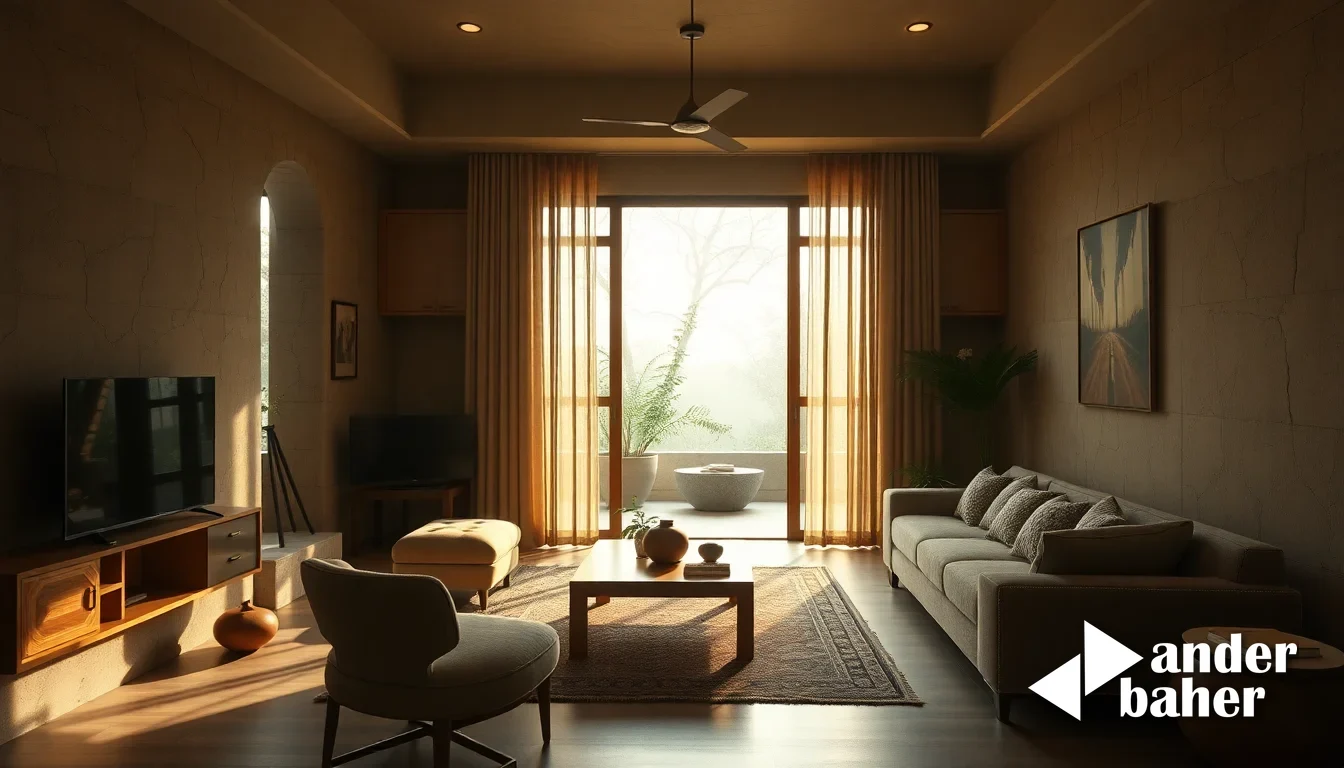
Walk into a Mumbai apartment built in the last five years and you'll notice something: the living room feels like a set. Not because it's artificial, but because it's been composed with the careful framing of a camera. The sofa angles toward a focal wall. The light falls in theatrical pools. There's a quality of performance to the space, even when no one is watching. This is the inheritance of cinema in our homes—a language so embedded in how we imagine ourselves that we've stopped noticing it.
Indian film has always been an architect of desire. Long before the internet, before Instagram, cinema showed us how to live. A particular shade of terracotta, the way a staircase could command a frame, the emotional weight of a doorway—these became blueprints. Not literal copies, but templates for feeling. When a Bangalore designer positions a low-slung sofa beneath a window that frames a garden, she's drawing from decades of visual storytelling. The gesture carries memory.
The Grammar of Cinematic Space
Cinema teaches us that space is narrative. Every room has a story arc. The entry sequence—how light meets shadow, how you're oriented—matters as much as the destination. Indian homes, particularly in metros, have begun to absorb this language. Corridors are no longer mere connectors; they're transitions. A kitchen becomes a stage for morning light. The bedroom isn't just functional; it's a meditation on intimacy and scale.
This doesn't mean homes look like film sets. Rather, they're designed with an awareness that inhabiting a space is a form of cinema for the self. A Bangalore architect might spend weeks calibrating the sight lines in a living room, knowing that how you move through it—where your gaze naturally travels—shapes your experience of home. It's directorial thinking applied to the everyday.
Imagination Over Imitation
The power of this influence lies not in replicating what we see on screen, but in understanding its visual logic. When cinema shows us a courtyard in monsoon light, we don't copy the courtyard; we learn how rain and stone can dialogue. We internalize the color theory, the proportions, the mood. A Mumbai home might borrow the *feeling* of a Kerala backwater scene—deep greens, the sound of water, a certain slowness—without recreating geography.
This is where Indian cinema's regional wealth becomes precious. The visual vocabulary of Tamil cinema differs from Punjabi cinema, which differs from Bengali cinema. A home designed in Chennai might unconsciously echo the warm, saturated palette of Kollywood interiors. These aren't conscious references; they're cultural air we breathe.
The Camera in Your Living Room
Modern Indian home design is increasingly aware of this relationship. Designers speak of "moment-making"—creating spaces that feel composed, intentional, alive with potential. It's a cinematic impulse: the understanding that a room should have depth, hierarchy, and surprise. That a corner can be a character. That light, framed properly, transforms material into metaphor.
What's emerged isn't a style, but a sensibility. Homes that don't feel designed for viewing, but for living with a certain consciousness. The difference is subtle and crucial. It's the space that knows it's being inhabited, that responds to presence the way a film responds to its audience.
In a city like Bangalore or Mumbai, where homes are often small, this cinematic awareness becomes essential. If every frame matters, if every sight line is considered, then constraint becomes an asset. The camera, after all, finds its greatest power in limitation.
Sources & further reading
- ArchDaily — Building the India of the Imagination: Cinema and the Making of Place ↗
- Dezeen — Finnish company launches "world's most carbon-storing building material" ↗
- ArchDaily — PAGEONE Bookstore at Wuxi Park Station / llLab. ↗
- ArchDaily — Grava House / remyarchitects ↗
An original Ander Baher perspective, informed by the coverage above.
Ready to transform your space — inside or out?
Tell us a little about your home or office. We'll get back within one working day.
Book a consultation