
Magazine › Interiors
Vastu & the Modern Apartment: Intention Over Dogma
How to honor Vastu principles in a glass-walled high-rise without compromise—a practical guide for newly-possessed apartments in Bengaluru and Mumbai.
By the Ander Baher Editorial Desk · 14 October 2026
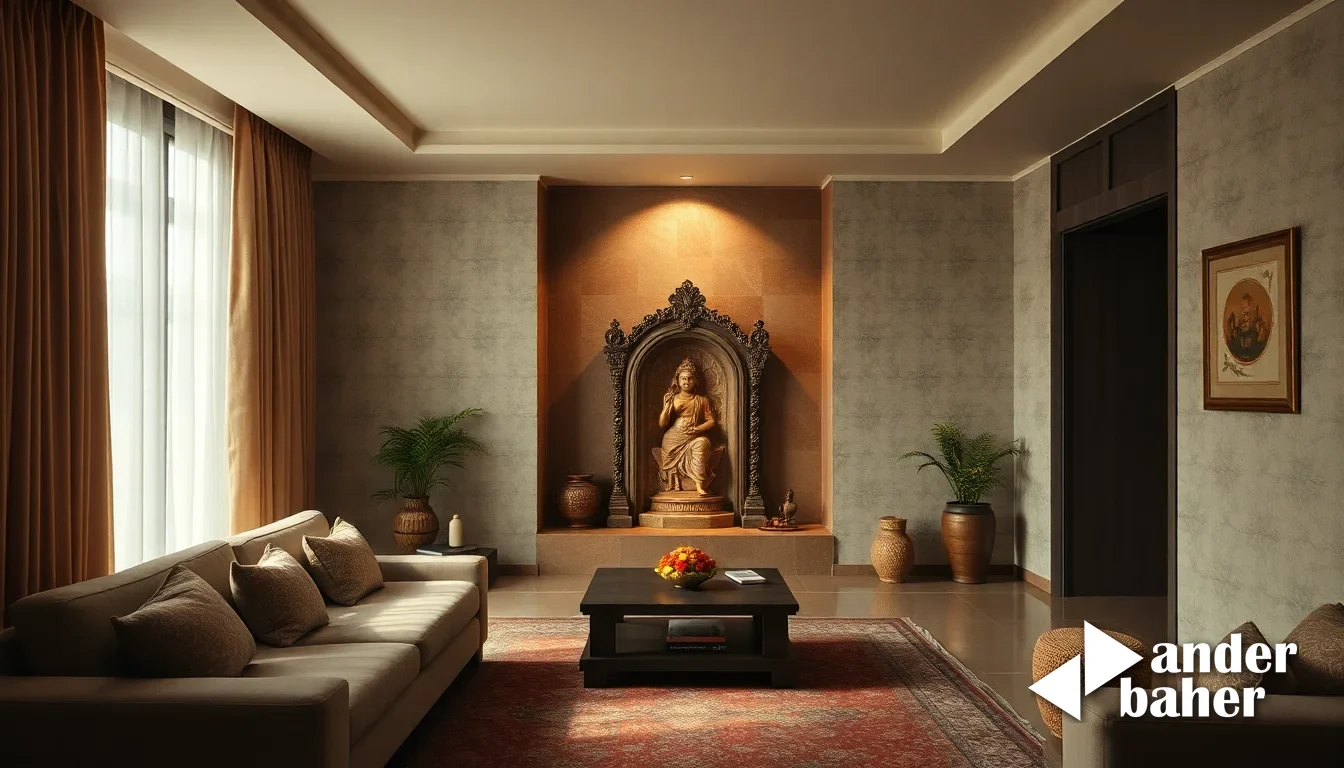
You've just taken possession of a corner unit on the 18th floor of a newly-completed tower off Sarjapur Road. The floor plan arrives pristine—glass walls, open kitchen, bedrooms with predictable rectangular layouts. And then the first question lands: where should the prayer room go? Which bedroom should the master occupy? Is the north-facing balcony auspicious?
Vastu Shastra, the ancient Indian science of spatial harmony, meets the irreversible geometry of the modern apartment. The collision is not contradiction—it is an invitation to intention.
The Vastu Apartment Paradox
Classical Vastu assumes an east-facing plot, a courtyard at the center, and cardinal alignment. A high-rise in Bengaluru—glass curtain walls, irregular footprints, balconies cantilevered toward the southwest—offers none of these anchors. Yet the residents who inhabit these towers bring lived memory: family customs, ritual, a sense of what feels right.
The reconciliation lies not in forcing ancient geometry into modern constraints, but in understanding the why beneath each principle. Vastu's preference for east-facing entry optimizes morning light and cooling cross-breeze. Its placement of the prayer room in the northeast—a quiet, serene corner—acknowledges that ritual space benefits from stillness and natural illumination. The master bedroom's orientation toward the southwest reflects both psychological comfort (a solid wall at one's back) and the practical reality of afternoon sun management.
In a glass-walled apartment, these intentions remain actionable.
Orienting Rooms in a High-Rise: Pragmatism & Principle
Walk into a just-handed-over unit at a premium development in Hebbal or Powai, and you inherit the structural reality: walls do not move. But the use of the space, the placement of furniture, the rhythm of daily movement—these are entirely your domain.
The master bedroom: If your apartment faces northwest or southeast, the western wall will catch afternoon heat. Vastu traditionally favors the southwest for the master—a principle rooted in thermal comfort and the psychological ease of a solid wall behind the bed. Rather than despair at an east-facing bedroom, reframe it: maximize cross-ventilation, use a strategic window treatment to manage glare, and position the bed so that your head aligns with the north or east (classic Vastu guidance for restful sleep). Comfort, not dogma, is the metric.
The prayer room or meditation corner: This is where intention crystallizes. Vastu prescribes the northeast—the quietest, least trafficked corner of the home, naturally cool and well-lit by morning sun. In an apartment, even a 4x4 foot corner qualifies. Facing northeast during prayer or meditation is an act of psychological grounding; the direction becomes sacred through consistent use, not through cosmic enforcement. A corner unit in a tower overlooking Yelahanka can dedicate its true northeast corner to this purpose; an interior unit can claim the quietest corner nearest the northeast and orient the altar accordingly.
The kitchen: Classical Vastu places the kitchen in the southeast—the direction associated with Agni, the fire element. This carries practical wisdom: morning light, airflow, and a space that naturally warms up benefit from southeastern exposure. If your apartment is configured otherwise, the principle remains: ensure adequate ventilation, position the cooking area where morning light enters, and resist the temptation to tuck the kitchen into a dark, landlocked corner. In open-plan layouts common in Bellandur and Lower Parel developments, a semi-open kitchen with a subtle material threshold (wood slats, a change in floor level) respects the separation principle without rigid walls.
Thresholds & Transitions: The Interior Geometry That Matters
Where Vastu truly speaks to the apartment dweller is in the language of thresholds—the junctures between spaces that create psychological clarity and ritual grace.
The entrance, according to Vastu, should face east, north, or northeast. Your apartment's entry door is fixed. But the threshold experience—how you transition from the public hallway into the private home—is entirely designable. A wooden jali screen, a change in flooring material, a console table with a small offering lamp: these create an energetic boundary without requiring structural change. They signal to the inhabitant, you are entering a different realm. This is psychology dressed in architectural intention.
Similarly, the boundary between kitchen and living space benefits from subtle definition. A low partition, a difference in ceiling height, or even a carefully placed plant cluster honors Vastu's instinct that cooking fire should be contained—not isolated, but acknowledged.
Light, Air & the Climate-Responsive Home
Beneath every Vastu principle lies climate wisdom. East and north-facing openings capture cool morning light. Southwest walls bear the weight of afternoon heat and should be protected. Cross-ventilation from opposing cardinal directions creates natural convection.
In a Bengaluru apartment facing the summer sun directly, or in a Mumbai home managing monsoon moisture on western balconies, these principles become not quaint tradition but design necessity. Vastu's insistence on cardinal awareness is a hedge against poor orientation—a way of saying, design with the sun and wind in mind. Thermal comfort precedes decoration; ritual follows from inhabitation that feels easy and natural.
A well-planned interior honors both the geometry you inherit and the intentions you carry. Our integrated interior and landscape practice begins with this conversation—understanding your family's Vastu values, mapping the apartment's structural constraints, and designing spaces that feel both principled and lived-in.
The Renovation Perspective: Retrofitting Intention
If you are renovating an older apartment in Koramangala or a legacy building in Bandra West—spaces that predate the open-plan revolution—Vastu becomes a lens for editing rather than imposing. A dark bedroom facing northwest may have felt cramped; opening the wall to an adjacent balcony, introducing light and air, naturally shifts the space's character. A kitchen tucked into a corner might breathe through the introduction of a transom window or a glass partition that preserves separation while eliminating gloom.
Renovation offers the rare opportunity to align plan with principle. It is worth the conversation.
Vastu is not a checklist to be ticked or a superstition to be dismissed. It is a language—ancient, embodied, rooted in climate and psychology—for thinking intentionally about how you move through your home. In the glass towers of Whitefield or the heritage precincts of Altamount Road, that language still speaks. Explore free AI design concepts that ground intention in your actual floor plan, or speak with our studio about integrating Vastu wisdom into your apartment's interior architecture. The best home is not the one that follows a doctrine—it is the one that feels inevitable because it honors both principle and the life you actually live.
Frequently asked
Can Vastu principles work in a high-rise apartment if it doesn't face the 'right' direction?
Absolutely. Vastu's core wisdom—optimization of light, airflow, and spatial hierarchy—remains actionable regardless of cardinal orientation. The key is understanding the *principle* beneath each guideline (e.g., northeast for the prayer room because it's cool and still, not because of cosmic direction alone) and adapting through thoughtful space planning, threshold design, and furniture placement. Intention matters more than rigid adherence to cardinal rules.
How do I create a prayer or meditation space in an apartment if my northeast corner is occupied by the kitchen or bathroom?
Reclaim the quietest, least-trafficked corner available—ideally still in the northern or eastern part of the home. Use subtle design language to establish it: a low jali screen, a different flooring material, soft lighting. Consistency and respect matter more than strict cardinal placement. Many inhabitants find that daily practice transforms any corner into sacred space.
Does Vastu apply differently to a newly-handed-over apartment versus a renovation?
Yes. In a new possession, you work *with* the fixed floor plan, optimizing placement of beds, altar corners, and thresholds within the inherited geometry. In a renovation, you have the rarer opportunity to *restructure*—removing walls, introducing light, and aligning the layout itself with Vastu principles. Both are valid; the latter simply offers more flexibility.
Ready to transform your space — inside or out?
Tell us a little about your home or office. We'll get back within one working day.
Book a consultation