
Magazine › Architecture
When Streets Become Living Rooms: Reimagining Shared Urban Space
A global conversation about public boulevards offers unexpected lessons for how we design the semi-private thresholds of our Indian homes.
By the Ander Baher Editorial Desk · 23 September 2026
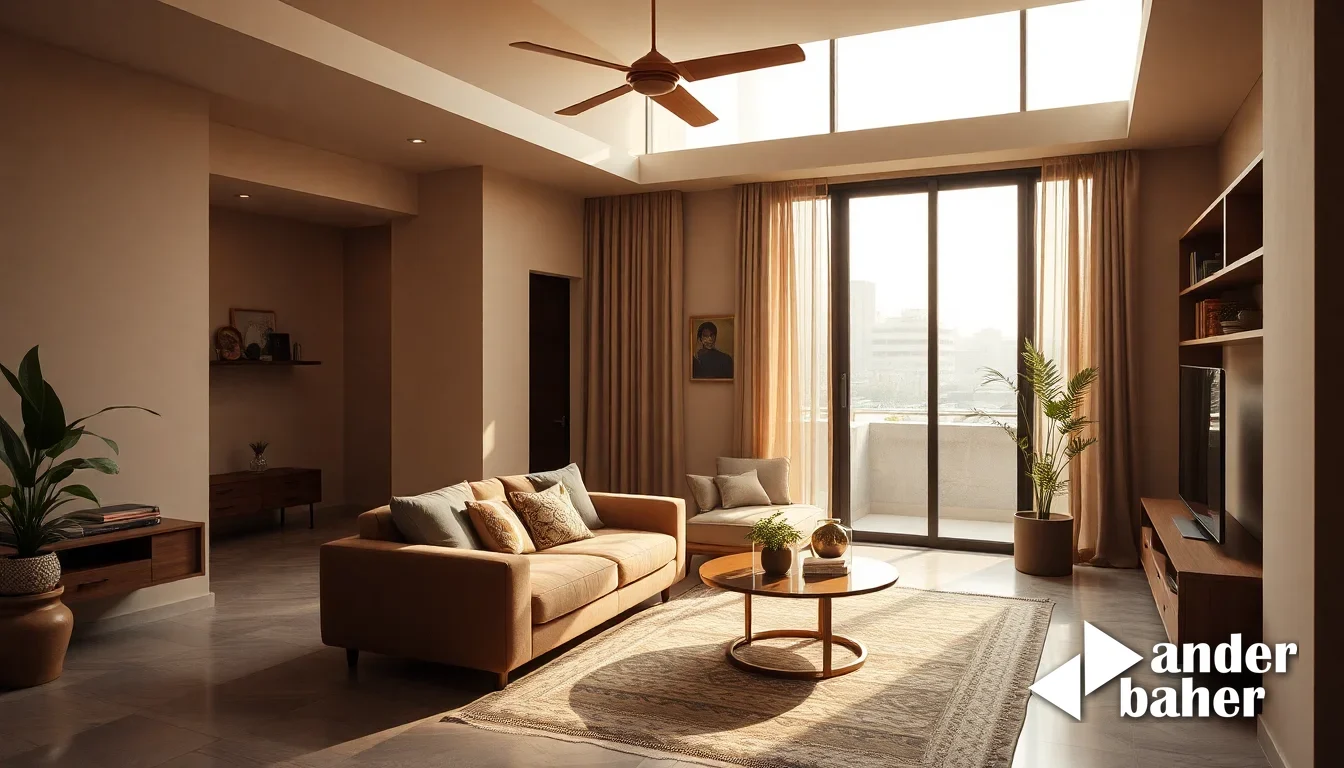
There is a particular kind of silence that falls over a boulevard when it has been imagined merely as a conduit—a space to move through rather than linger in. Concrete, bureaucratic, functional. Yet when cities around the world begin asking designers to reconsider these arteries as social gathering grounds, something shifts. The boulevard becomes a living room. And in that shift lies a quiet lesson for how we think about the spaces immediately outside our own doors in Indian cities.
The impulse to transform public circulation into inhabited space is not new. But it arrives at an urgent moment, particularly in cities like Bangalore and Mumbai, where the boundary between home and street has become increasingly hostile. Walls grow higher. Compounds thicken. The veranda—that once-essential buffer space where domestic life quietly announced itself to the street—has nearly disappeared from contemporary apartment blocks.
The Threshold as Democracy
When designers are invited to reimagine urban thoroughfares, they are really being asked to restore a democratic principle: that movement and gathering need not be opposed. A well-designed boulevard accommodates both the person rushing to work and the couple lingering over tea. It creates rhythm through variation—planted zones, seating clusters, sudden widening. Street trees cast shadows. Materials change underfoot. The eye finds rest.
This sensibility—the belief that public space should feel inhabited rather than surveilled—belongs in our homes too. The forecourt of a Mumbai villa, the lobby of a Bangalore apartment, the courtyard that mediates between street and living room: these are the boulevards of domestic life. Yet many are designed with the same utilitarian indifference we see in failing urban streets. They are blank, sterile, unwelcoming even to residents.
Texture, Light, and Slowness
What transforms a threshold is texture. The warmth of stone worn by footfall. A boundary planting that softens rather than walls off. Seating that suggests pause. Light that changes through the day as trees move shadows across paving. These elements cost little but require attention—the willingness to think of a transitional space not as wasted square footage but as the carefully choreographed moment between two worlds.
In Indian homes, this has always been intuitive. The deep verandah of a colonial bungalow. The jali screen that dissolves the boundary between inside and outside. The courtyard garden that is neither fully private nor public but holds both possibilities. These are not nostalgic indulgences. They are spatial strategies that acknowledge how we actually live: moving between solitude and community, sometimes within a single afternoon.
The Invitation
When a city asks its architects to reconsider a boulevard, it is implicitly asking residents to do the same with their own thresholds. What would change if your front courtyard were designed as generously as a public square? If it invited lingering rather than surveillance? If it acknowledged that the most meaningful moments often happen in the in-between—not quite home, not quite street, but something more honest than either.
The boulevard teaches us that good design is an act of inclusion. It says: this space is for you to move through, but also to stay. To be seen and to see. These are radical thoughts in cities growing increasingly gated. Yet they begin at home, in those small contested spaces where domestic life meets the world.
Sources & further reading
- ArchDaily — Open Call: Urban design competition for the Kłodnica Boulevards in Gliwice ↗
- ArchDaily — The Forum Installation 2027 Open Call for Site-Responsive Installations ↗
- ArchDaily — Call for Abstracts: 2027 Modern Conversation Conference on Education ↗
- ArchDaily — TH+ house / ODDO architects ↗
An original Ander Baher perspective, informed by the coverage above.
Ready to transform your space — inside or out?
Tell us a little about your home or office. We'll get back within one working day.
Book a consultation