
Magazine › Materials
Stone and Silicon: How Natural Materials Meet Modern Living
As technology reshapes how we finish our homes, natural stone remains our anchor to tactile, timeless beauty—and the two are learning to coexist.
By the Ander Baher Editorial Desk · 7 October 2026
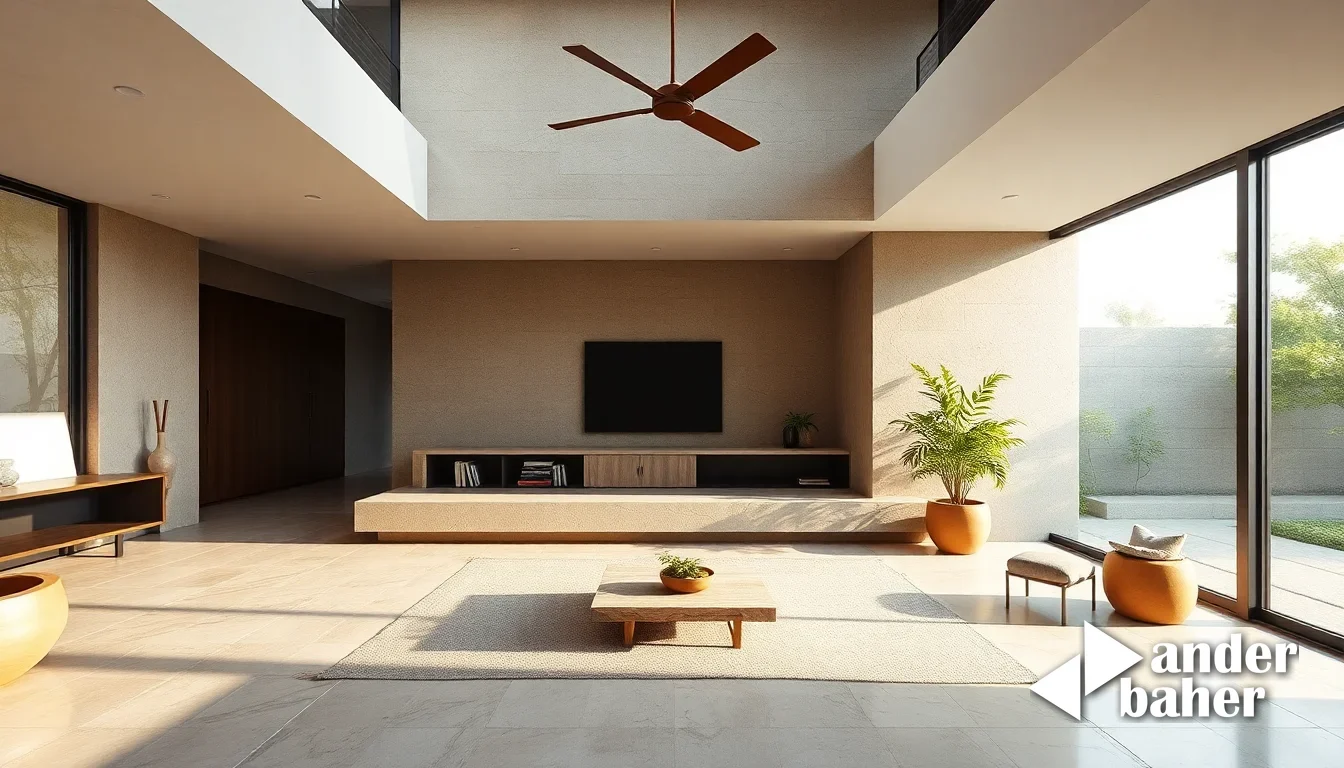
Walk into a Bangalore apartment lobby these days and you'll notice something curious: a slab of marble or granite that feels ancient, yet the wall beside it glows with smart lighting that shifts with the hour. This is not contradiction. This is the quiet conversation happening in contemporary Indian homes between what endures and what evolves.
For decades, we've treated natural stone and technological advancement as opposing forces. Stone belonged to tradition—the grandmother's kitchen threshold, the temple courtyard, the colonial bungalow's flooring. Technology arrived as sleek, antimicrobial, maintenance-free alternatives. But somewhere between the quarry and the showroom, the conversation has shifted. Designers and manufacturers are no longer asking which one wins. They're asking what happens when both are present.
The Craft of Precision
Modern fabrication tools have changed what's possible with stone without stripping away its essential character. A slab of Bangalore black granite today can be finished with laser precision—edges that are mathematically exact, surfaces that catch light in previously impossible ways. Yet the stone itself remains stone: porous, warm to the touch, aging visibly over decades. The technology doesn't replace the material. It amplifies its potential.
This distinction matters in Indian homes, where stone has always been more than finish. It carries memory. A threshold worn smooth by generations of feet, or a courtyard wall that holds the day's heat and releases it slowly at dusk—these are not decorative choices but embedded wisdom about living well in a specific climate. When we enhance stone's performance through better cutting, sealing, or integration with other materials, we're not erasing that heritage. We're translating it for contemporary living.
Surface and Systems
Consider how stone surfaces now integrate with building systems. A limestone wall in a Mumbai penthouse might now incorporate concealed drainage, thermal regulation, or integrated ambient lighting—all invisible from the living side. The stone still ages, still develops patina, still feels like stone. But beneath, it performs like a intelligent material, responsive to climate and use.
This layering mirrors how many Indian homes already function: a traditional plaster finish over a sophisticated structure, ornamentation that hides durability, beauty that serves purpose. Modern stone finishing simply makes this layering visible and intentional.
The Question of Authenticity
There's a lingering anxiety that technological enhancement somehow compromises authenticity. But a stone's authenticity lies in its geological truth and tactile honesty, not in the tools used to shape it. A marble surface that's laser-finished is no less marble than one worked by chisel—merely differently interpreted. What matters is intention: whether the technology serves the material's essential qualities or obscures them.
In Indian design practice, this distinction proves crucial. We've always valued materials that improve with age, that show use, that connect us to the earth. Technology that honors these qualities—that makes stone more durable, more beautiful over time, easier to live with—simply extends a conversation we've been having for centuries.
The most compelling homes emerging now aren't those that choose between stone and innovation. They're spaces where a beautifully finished natural surface sits beside smart systems, where tactile richness and invisible performance coexist. That balance—between the ancient and the algorithmic—may be the most honest way to design for how we actually live.
Sources & further reading
- Dezeen — Five Marmomac highlights that explore natural stone and new technology ↗
- Dezeen — Ceramiche Keope unveils trio of stone-effect surfaces for "varied and cohesive" interiors ↗
- designboom — concrete letterforms become sculptural skatepark by XPOME in bulgaria ↗
- Dezeen — Jaguar "inaugurates a new era" with Type 01 electric car ↗
An original Ander Baher perspective, informed by the coverage above.
Frequently asked
How does modern stone fabrication enhance natural materials without compromising their character?
Contemporary techniques like laser precision finishing amplify stone's inherent qualities—better edges, enhanced light-catching surfaces—while preserving its essential warmth, porosity, and ability to age visibly. The technology serves the material rather than replacing it.
Can natural stone integrate with smart home systems and building technology?
Yes. Modern stone surfaces now incorporate concealed drainage, thermal regulation, and ambient lighting without visual disruption. The stone retains its tactile honesty while performing as an intelligent, climate-responsive material.
Is technology-enhanced stone still authentic?
Authenticity in stone lies in its geological truth and tactile honesty, not the tools used to shape it. A laser-finished marble is as authentic as chisel-worked stone—merely a different interpretation that extends centuries of Indian design philosophy about materials that improve with age.
Ready to transform your space — inside or out?
Tell us a little about your home or office. We'll get back within one working day.
Book a consultation