
Magazine › Terrace
The Ascending Room: Why Sky Terraces Matter Now
As cities crowd upward, the rooftop becomes a threshold between domestic life and open sky—a reimagining of what home can hold.
By the Ander Baher Editorial Desk · 2 August 2026
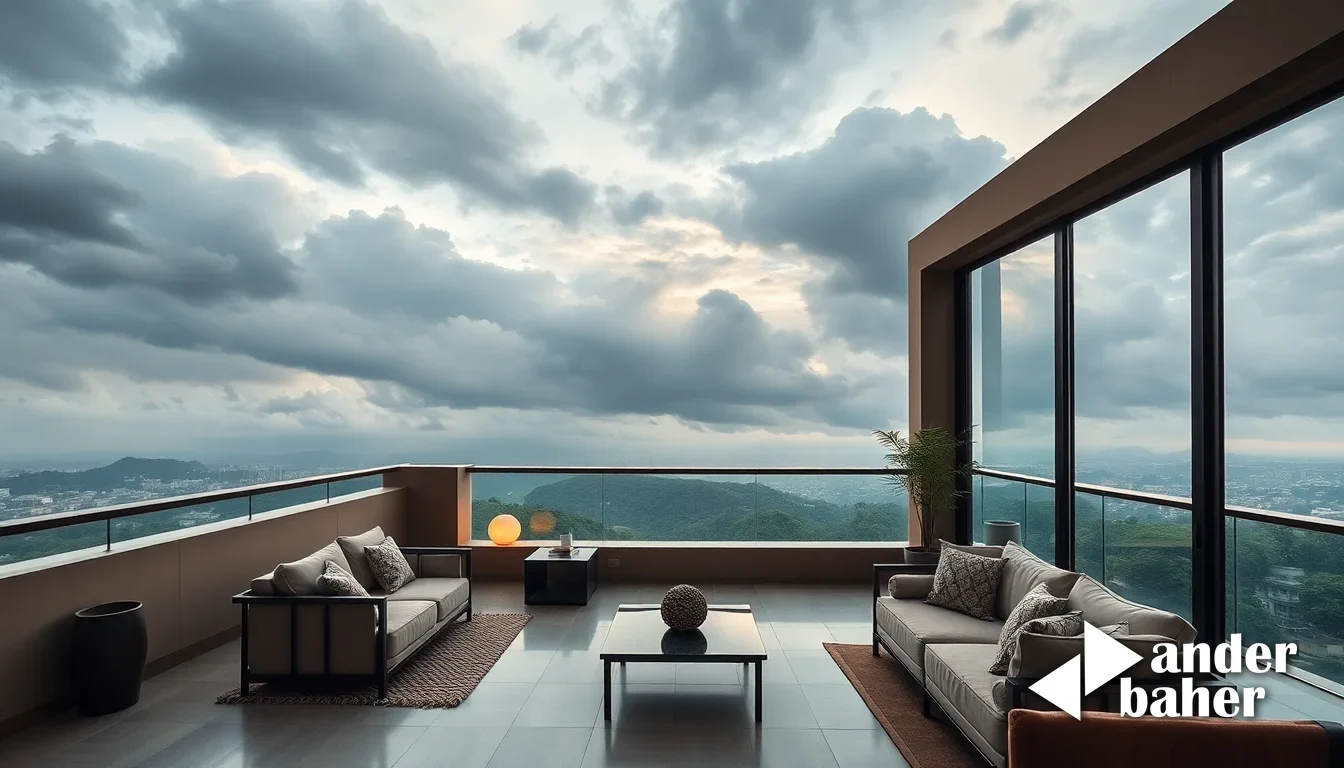
The rooftop was once purely functional—a place for water tanks and drying clothes, a necessary burden atop the home. But something has shifted. In Bangalore's evolving apartment towers and Mumbai's aging chawls undergoing renovation, architects and homeowners are reclaiming these elevated spaces as extensions of living itself. The sky terrace has become less novelty and more necessity, a response to the particular hungers of contemporary urban life.
The Case for Vertical Breathing Room
In a city where ground-floor gardens are a luxury reserved for the few, the rooftop offers something more democratic: unmediated access to horizon, wind, and seasonal light. This matters not just for the view, but for the body's relationship to time. A morning spent on a sky terrace—watching monsoon clouds gather or observing how light travels across neighboring buildings—recalibrates the nervous system in ways an interior room cannot.
The need is physiological as much as psychological. Urban apartments, especially in high-density areas, can feel hermetically sealed. A terrace breaches that seal. It introduces temperature variation, natural ventilation, and a sense of expansiveness that square footage alone cannot provide. For families in compact two-bedroom flats, it functions as a fourth room—one that changes with the hour and season.
Designing for Life, Not Just Views
The distinction between a raw rooftop and a designed sky terrace lies in intention. A terrace that matters is one planned as carefully as any interior room: the placement of shade structures (often indigenous screens or wooden louvers) to filter afternoon heat; permeable flooring that drains quickly during the rains; zones for sitting, potting plants, or simply standing still.
In Mumbai's humidity and Bangalore's variable climate, the terrace requires material honesty. Concrete cracks under thermal stress. Terracotta breathes. Local stone—granite, slate, or laterite—weathers gracefully and keeps surfaces cooler. Shade is not optional; it is foundational. A pergola of bamboo or timber, planted with fast-growing creepers like bougainvillea or passion fruit, transforms a hostile rooftop into a usable threshold within seasons.
Water management is equally critical. Rather than blank asphalt, consider raised planting beds that absorb and filter runoff. These beds serve double duty: they support the small vegetable or herb garden that many urban dwellers crave, and they mitigate the heat island effect that plagues concrete roofs.
More Than Ornament
A sky terrace works hardest when it answers a real need in the home's rhythm. For the early riser, it is a meditation space. For the evening cook, a place to grow fresh basil and mint. For the child, an outdoor laboratory. For the adult staring at interior walls, it is permission to breathe.
The investment—in proper waterproofing, in structural assessment, in thoughtful materials—is not trivial. But the return is measured not in rupees but in days: the number of mornings you choose to spend there, the shift in how you inhabit your home when sky becomes part of the floorplan. In cities that climb higher each year, the rooftop is no longer a forgotten edge. It is the room we have been waiting to remember.
Frequently asked
How do I transform my existing rooftop into a usable sky terrace?
Begin with structural assessment and waterproofing—non-negotiable foundations. Then layer in intention: shade structures (bamboo pergolas work beautifully in both climates), permeable or breathable flooring materials like local stone or terracotta, and water-management systems such as raised planting beds. The design should reflect how you actually live, not aspirational images.
What materials perform best for sky terraces in Mumbai's humidity and Bangalore's climate?
Terracotta, local stone (granite, slate, laterite), and timber age with grace and perform thermally better than concrete, which cracks under thermal stress. Bamboo and fast-growing creepers like bougainvillea or passion fruit establish functional shade within seasons.
Can a small sky terrace really function as additional living space?
Yes. For compact flats, a well-designed terrace operates as a fourth room—one that shifts with light and season. It breaches the hermetic seal of urban apartments, introducing temperature variation, natural ventilation, and expansiveness that square footage alone cannot provide.
Ready to transform your space — inside or out?
Tell us a little about your home or office. We'll get back within one working day.
Book a consultation