
Magazine › Terrace
The Pergola's Second Act: Reimagining Shade for Indian Terraces
A pergola is not merely a garden structure—it's an instrument for reclaiming your terrace in the brutal months of heat, and for composing light across seasons.
By the Ander Baher Editorial Desk · 24 July 2026
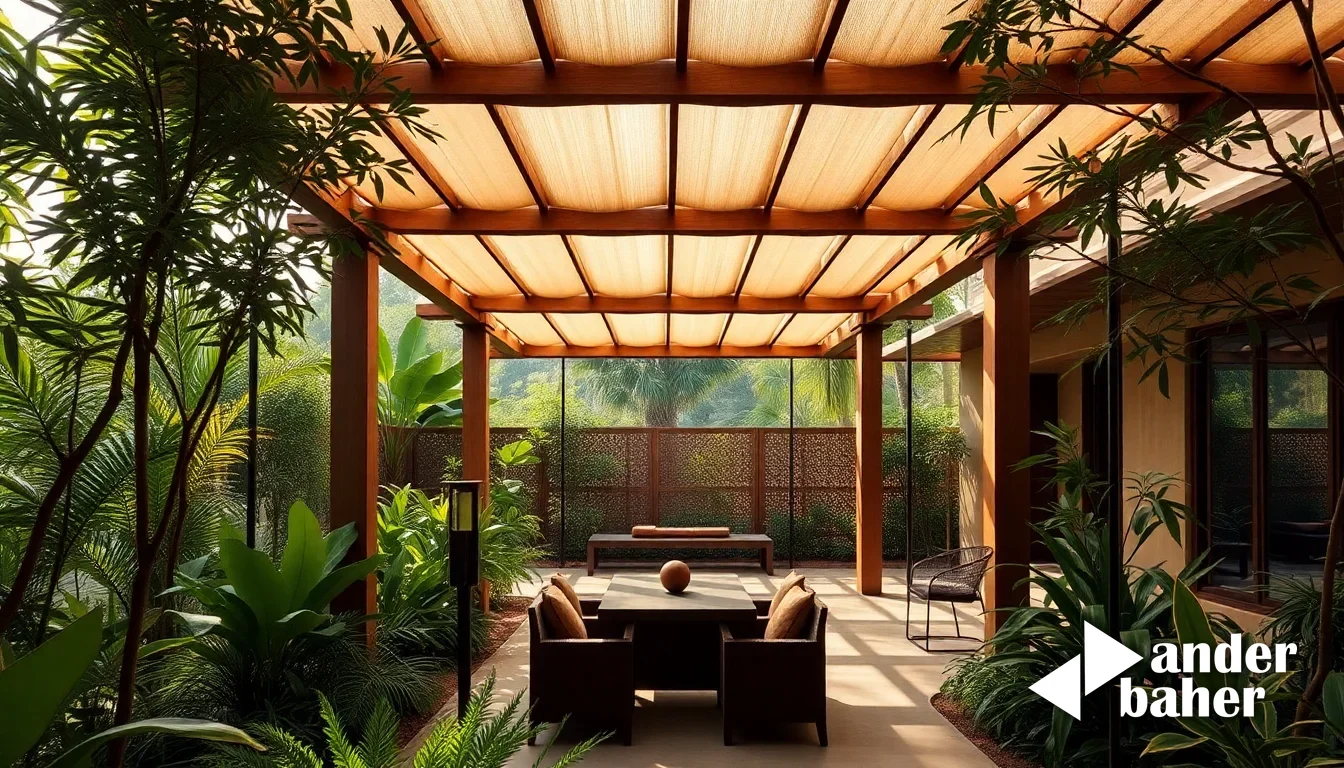
The terrace in an Indian home occupies a peculiar geography. It sits between the domestic interior and the open sky, neither fully sheltered nor entirely exposed. For most of the year—particularly between March and October—it remains uninhabitable, scorched by direct sunlight and abandoned to laundry lines and water tanks. A thoughtfully designed pergola transforms this threshold into a livable extension of the home, offering structured shade without the weight of a permanent roof.
Reading Light and Shadow
A pergola succeeds or fails based on its relationship to the sun's arc. In Delhi, where summer temperatures exceed 45°C, a pergola oriented east-west, with its slats running north-south, will filter the harsh afternoon western light while permitting cooler morning sun. In Mumbai's humidity, the same orientation becomes less critical—what matters more is cross-ventilation and the ability for monsoon rains to pass through rather than collect.
The spacing of slats determines whether your pergola functions as a true shade structure or merely a visual gesture. Slats placed 15 centimeters apart provide dappled light suitable for reading or morning coffee; spacing them at 30 centimeters apart offers the poetic play of shadows without meaningful temperature reduction. In Bangalore's temperate climate, even loose spacing suffices. On a Bombay rooftop, tighter spacing becomes practical necessity.
Materials for Durability and Character
Teak remains the most resilient choice for Indian pergolas, though its cost has climbed steeply. Sal wood and mango wood offer comparable durability at lower expense, and weathered gracefully when left untreated to silver naturally. Powder-coated mild steel structures, increasingly popular in Mumbai apartments, require diligent maintenance in coastal humidity but age with an austere elegance. Bamboo, surprisingly hardy when properly treated, introduces warmth and alignment with regional building traditions.
Whatever material you select, finishes matter acutely. Exterior stains that breathe—rather than seal the wood with thick varnish—allow seasonal expansion without splitting. In high-humidity zones, ensure adequate gaps between boards for airflow.
Beyond Shade: Living Structure
The most architecturally resolved pergolas become scaffolding for living material. Bougainvillea, jasmine, and clematis climb eagerly across wooden slats in most Indian climates, their dense foliage layering natural shade upon structural shade. This demands periodic pruning but rewards with flowers and the soft susurration of wind through leaves. Fast-growing climbers like ivy mature within seasons, not years.
The pergola need not sprawl across an entire terrace. A modest structure—2.5 meters by 3 meters—positioned to shelter a seating area or dining zone creates an oasis of usable outdoor space during shoulder seasons. Paired with outdoor furniture in weathered wood or metal, it becomes less utility and more composition.
A well-proportioned pergola with disciplined material choices and intelligent solar orientation doesn't solve the terrace—it doesn't pretend to. Rather, it negotiates between the intensity of the Indian sky and the human need for respite, inviting you to inhabit your rooftop not despite the heat, but alongside it.
Frequently asked
How should a pergola be oriented to provide effective shade on an Indian terrace?
Orientation depends on climate: in Delhi's extreme heat, position slats north-south (running east-west) to filter harsh afternoon western light while admitting cooler morning sun; in Mumbai, cross-ventilation and monsoon drainage take priority over directional control; Bangalore's temperate climate permits looser spacing. The sun's arc and local humidity patterns should guide your design.
What's the best material for a pergola in coastal or high-humidity Indian cities?
Teak is most resilient but costly; sal and mango woods weather beautifully at lower expense. Powder-coated mild steel suits Mumbai apartments with disciplined maintenance, while bamboo—properly treated—offers durability and cultural resonance. Choose breathable exterior stains over thick varnish to permit seasonal wood movement.
Can climbing plants improve a pergola's performance as a shade structure?
Yes. Bougainvillea, jasmine, and clematis thrive across most Indian climates and layer living shade atop the structural frame, though they require periodic pruning. Fast-growing varieties like ivy mature within seasons, transforming a utilitarian pergola into a composed outdoor room.
Ready to transform your space — inside or out?
Tell us a little about your home or office. We'll get back within one working day.
Book a consultation