
Magazine › Interiors
Beyond the Trophy: Building Worlds That Belong to Us
What does it mean to 'build a world' in a 1200-sq-ft apartment in Whitefield? How Indian interiors transcend decoration to become coherent, climate-aware narratives.
By the Ander Baher Editorial Desk · 23 November 2026
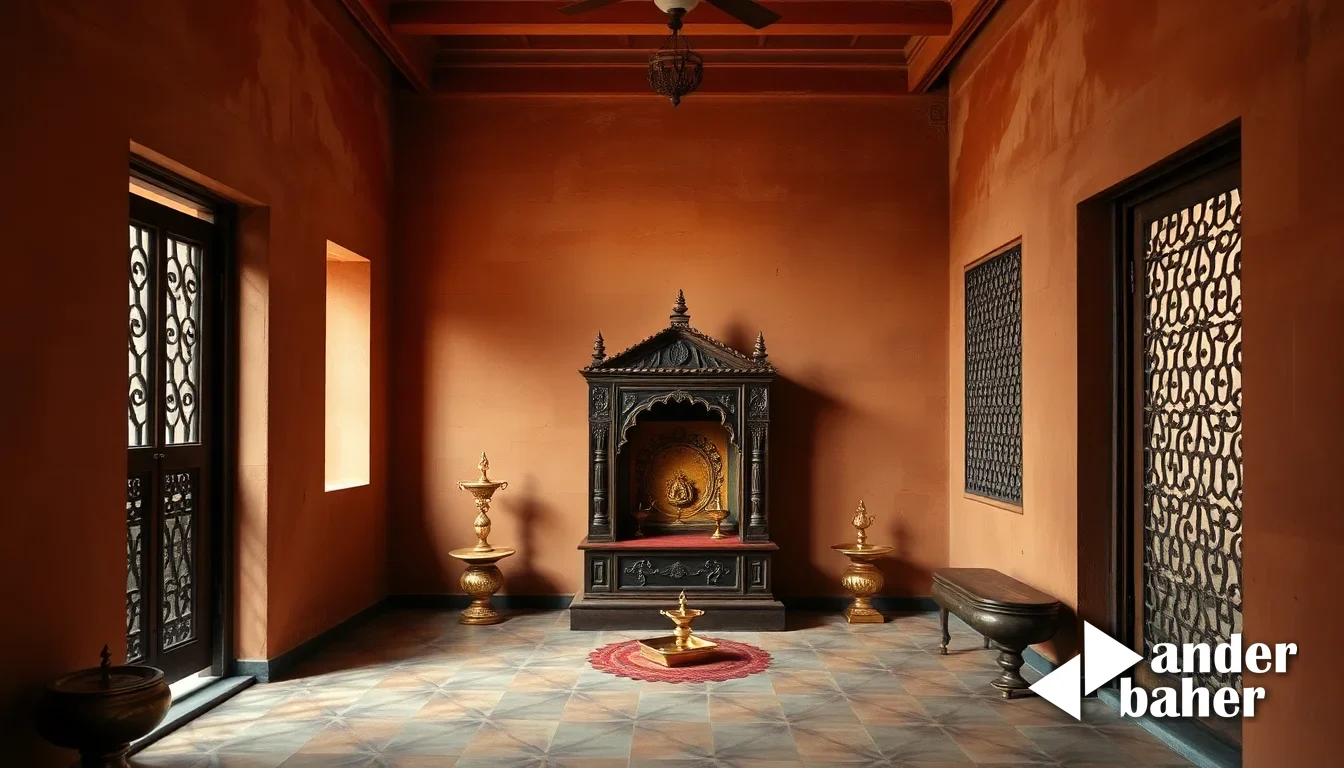
When a design wins at a major festival, it usually earns praise for a singular gesture—a facade, a material, a colour. But the real work of architecture and interiors isn't about one brilliant moment. It's about coherence: the architecture of intention that holds a space together across light, season, ritual and weather. That's what 'world-building' means in the context of Indian homes.
Consider what happens when you move into a newly-handed-over apartment in one of Bengaluru's gleaming towers—say, a just-completed residential block off Sarjapur Road, or a Whitefield development where the builder has handed you white walls, beige marble, and a balcony facing west. You inherit a shell. The question isn't whether to decorate it; it's whether to author it. That's world-building: the deliberate layering of material, light, threshold, and function until the space doesn't feel like a apartment number. It feels like a coherent story you chose to live in.
What It Means to Build an Interior World
An interior that 'builds a world' doesn't announce itself. It unfolds. You enter a threshold where the light changes. A jali screen filters the afternoon glare into geometric calm. The floor material shifts from polished concrete to warm wood, signalling transition without a door. The colour palette—perhaps natural indigo, terracotta, ash—repeats across textiles, plaster, and ceramic, so the eye never jolts. Every element—from the height of a shelf to the depth of a window recess—serves both beauty and function in the same breath.
In a rain-prone city like Mumbai, or a heat-intense zone like Bengaluru, that coherence must also be climatic. World-building means designing your interior to respond to monsoon, summer sun, and seasonal light shifts as a unified system, not fighting them with air-conditioning alone. A Byculla apartment with deep balconies and strategic external shading; a Sarjapur home with cross-ventilation baked into the layout and furniture arrangement—these aren't afterthoughts. They're the scaffolding of the world.
How Do You Create Intentional Interiors in a New High-Rise Apartment?
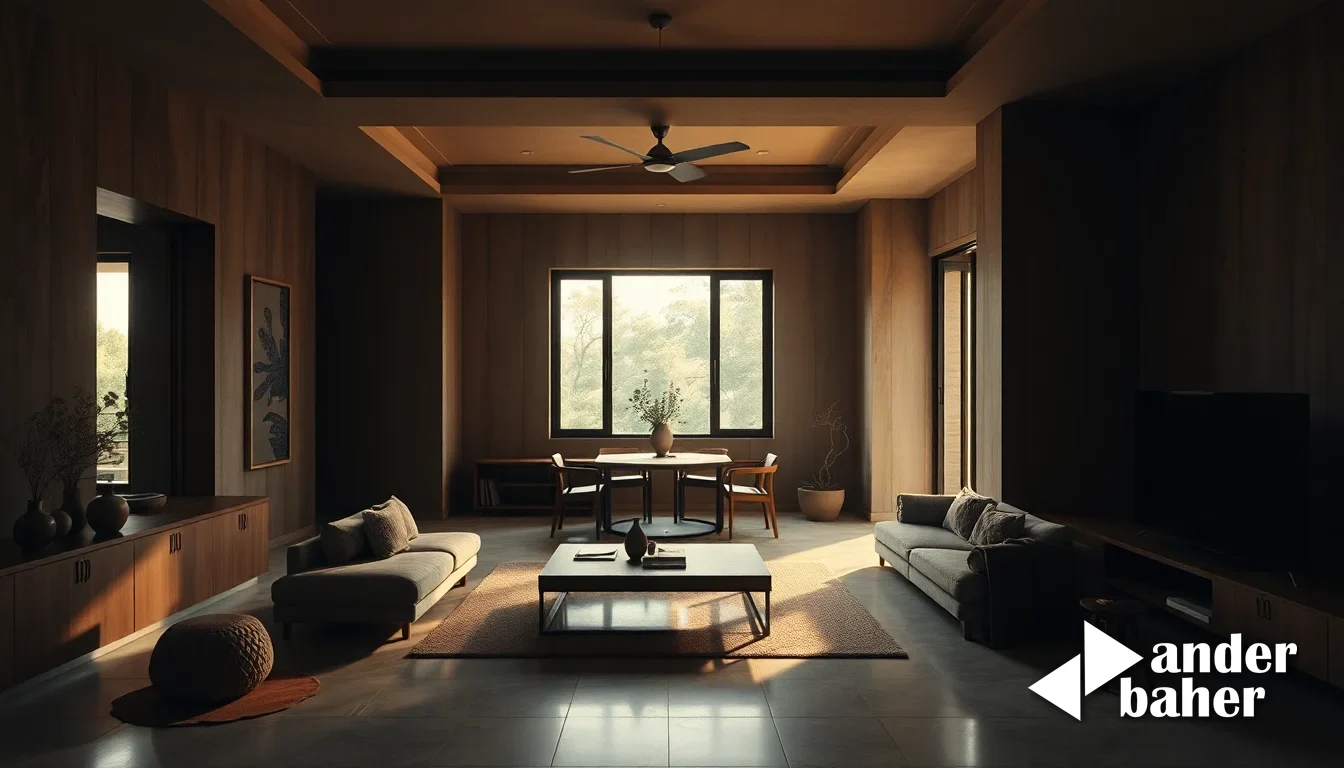
Start before you buy furniture. The world begins with the threshold, the sightline, the light path. It's about asking: how does morning sun enter this space? Where do shadows fall at 4 p.m.? What view do I frame, and what do I screen? In a newly-handed-over tower in Devanahalli or Carmelaram, you have the rare chance to retrofit systems—acoustic treatment, ventilation, thermal mass through plaster or stone—before the first sofa arrives. The mistake most owners make is treating interiors as decoration applied to a fixed shell. The world-building approach treats the shell itself as the first material to edit.
Then comes layering: surfaces that speak to each other. Rather than a 'style' (say, industrial or Scandinavian), think in terms of a material narrative. If your walls are raw concrete, your textiles might be linen and undyed wool. If your flooring is terrazzo, your joinery might be brass and ash wood. Each choice asks permission from the last one. The result feels inevitable, as if the space could never have been any other way.
Ander Baher's approach to interiors—whether we're designing a 1200-sq-ft apartment in Powai or a sprawling villa in a Bengaluru suburb—starts here: not with aesthetics, but with systems. How does light and air move? How does the inhabitant's daily rhythm inhabit the space? What materials will age gracefully in this climate? Only then do we make decisions about colour, form, and ornament. The world builds itself.
The Renovation Paradox: Authoring a Borrowed Space
Many homeowners in established Mumbai neighbourhoods like Worli or Bandra East, or long-settled Bengaluru enclaves like Frazer Town, face a different challenge: they've inherited a dated layout, compromised balconies, structural dampness. Here, world-building means radical editing. Sometimes it's removing a wall to reunify a fragmented plan. Sometimes it's completely rethinking how the balcony functions—not as a storage dump, but as an extension of the interior threshold, weatherproofed and thoughtfully planted.
This is where the integration of interior and landscape design becomes essential. That damp Worli balcony isn't just a moisture problem; it's a missed opportunity. With proper membrane systems, strategic planting in containers, and careful material selection, it becomes a liminal world—part home, part garden—that shifts your relationship to the apartment entirely. The same principle applies to courtyards in older Mumbai buildings or the compact outdoor spaces in Bengaluru's new residential clusters.
Materials as Narrative
In an award-winning interior, materials rarely shout. They whisper continuity. A Bengaluru home designed around locally-quarried granite, warm plaster in earth tones, and timber joinery will age differently—and more authentically—than one that imports Italian marble and treats every surface as a show piece. The world you build should be able to weather gracefully, to patina, to show time passing through it.
This is especially true in India, where monsoon, heat, and dust are not problems to be hidden but conditions to be designed for. A material choice that feels inevitable in winter might be questioned during June rains. The best interiors anticipate this seasonality and embrace it. A concrete floor will cool naturally in summer and show water stains after monsoon—and that's not a failure. It's the interior speaking its own climate.
When you step back and look at the spaces that feel most alive—whether in a Thanisandra apartment, a Powai penthouse, or a heritage bungalow in Lower Parel—you notice they have this quality: inevitability. Not austere or minimalist for its own sake, but coherent. Every decision seems to follow from the last. The world doesn't feel decorated; it feels authored. That's the ambition behind world-building: not to win a trophy, but to create a space so intentional that living in it feels like you've finally arrived home.
Bring intention to your interior. Explore our completed spaces, or begin with a free AI concept to see how your apartment might transform when every element serves both beauty and place.
Sources & further reading
- ArchDaily — World Building of The Year and Interior of The Year revealed at World Architecture Festival 2026 ↗
- designboom — detour 2026 proves ‘better, not perfect’ is all it takes across 14 installations and a pop-up shop ↗
- ArchDaily — Fukasawa Commercial Building / KEY OPERATION INC. / ARCHITECTS ↗
- ArchDaily — Biarritz Building - Cooperative Housing / Ariel Jacubovich | Oficina de Arquitectura ↗
An original Ander Baher perspective, informed by the coverage above.
Frequently asked
What does interior world-building mean for a new apartment in Bengaluru?
It's designing your interior as a coherent system where light, materials, layout, and climate response work together intentionally, rather than treating it as a shell to decorate. Every choice—from threshold design to material selection—serves both function and narrative.
How do I create an intentional interior in a newly-handed-over high-rise?
Start before furniture: map light paths, plan climate response (cross-ventilation, shading, thermal mass), and retrofit systems. Then layer materials that speak to each other—jali screens, natural finishes, strategic colour—so the space feels inevitable rather than assembled.
Can a renovation in an older Mumbai apartment become an intentional world?
Yes, through radical editing: rethinking layout, solving structural issues like monsoon dampness, and integrating landscape into balconies and courtyards. This transforms dated spaces into coherent interiors that age gracefully.
What materials work best for intentional interiors in Indian homes?
Locally-sourced, climate-responsive materials—natural stone, earth-toned plaster, timber—that age authentically through seasons and weather. Avoid finishes that fight the climate; instead, design systems that embrace heat, humidity, and rainfall as part of the interior's narrative.
Ready to transform your space — inside or out?
Tell us a little about your home or office. We'll get back within one working day.
Book a consultation