
Magazine › Interiors
Living Intentionally: Designing Homes for a Lifetime
Thoughtful interiors that evolve with you—from mobility to wayfinding to light. How premium homes in Bengaluru and Mumbai are being reimagined for longevity and grace.
By the Ander Baher Editorial Desk · 16 October 2026
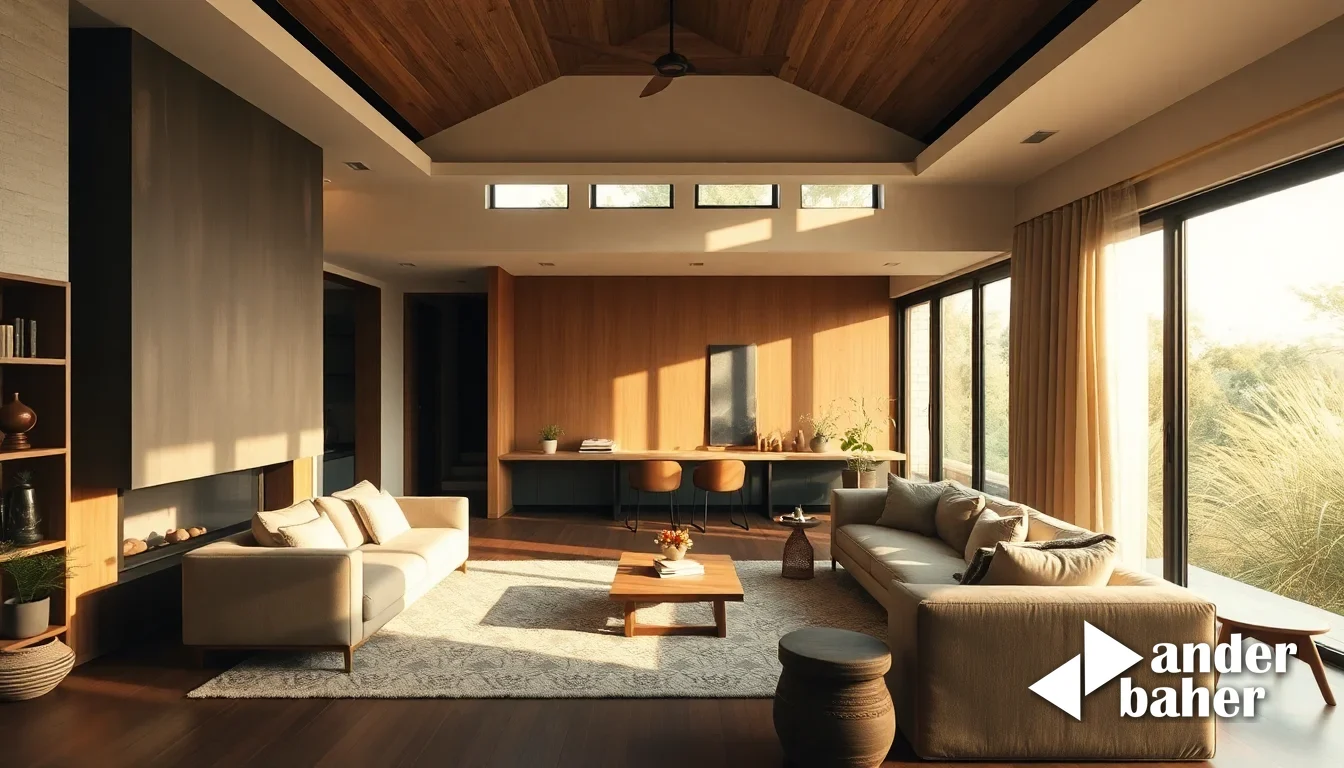
Most homes are designed for a single moment—the young professional moving into a freshly handed-over high-rise in Whitefield, or the growing family settling into a newly-completed tower off Sarjapur Road. But a home that truly matters is one that grows with you. It holds you when your stride changes. It lights your path at 3 a.m. It knows you might need to work from bed one season, and dance in the living room the next.
This is not the austere vocabulary of medical design. It is not about grab bars and institutional beige. It is architecture that whispers its intelligence—thresholds that disappear, hallways that breathe, kitchens that welcome you from any angle, materials that grip without announcing themselves.
The Threshold as Conversation
The first act of thoughtful longevity design is the threshold itself. In the just-handed-over apartments rising over Lower Parel or the established premium homes around Domlur, the boundary between one room and another often remains a silent trap: a step down, a narrow opening, a psychological hurdle.
Reimagine it. A subtle ramped transition in polished concrete or warm timber—so gentle it reads as a design flourish, not an adaptation. No visual scar. A doorway widened not to hospital standards but to the spatial generosity of a gallery. Railings that are also the wall itself, rendered in oiled walnut or blackened steel: they become the architecture, not an afterthought bolted on.
In the sprawling layouts of a Bengaluru development like those near Kudlu Gate or Kogilu, where interiors often sprawl across open plans, these transitions become the punctuation of daily life. They slow you down. They orient you. They can be the most elegant sentences in a home's vocabulary.
Light as Navigation
The interior designer's obsession with natural light takes on new purpose when you consider that our eyes age, our pupils shrink, and shadows deepen. But this is not an excuse for the tyranny of bright everywhere.
Instead: intentional, layered illumination. Warm task lighting at key moments—the bedside, the reading nook, the kitchen counter. Ambient light that can be dimmed without losing its character. Architectural details that catch and scatter light across surfaces, reducing glare while maintaining definition. A jali screen or slatted timber partition becomes both ornament and diffuser, softening afternoon sun without erasing it.
In Mumbai's monsoon climate, where dampness and poor cross-ventilation plague older renovations and where even new construction at locations like Worli or Byculla must contend with humidity, strategic lighting also becomes a tool for visual clarity—it helps you read the space, understand its geometry, move through it with confidence.
Consider a home in a newly-completed tower near Hennur or Ivc Road: the interior scheme might introduce warm, dimmable LEDs integrated into joinery, coupled with natural light filtered through external shadings. The effect is not medicinal. It is inviting.
Surfaces That Know Your Hand
The texture of a handrail, the grip of a kitchen countertop, the feel of flooring underfoot—these are the conversations your body has with your home every single day. Yet in mass-market interiors, they are rarely considered.
Premium finishes in homes across Bengaluru and Mumbai often favour slick, polished surfaces: high-gloss tile, burnished concrete, lacquered joinery. Beautiful, yes. But ask yourself: does this surface want to be held?
Thoughtful longevity design introduces counter-intuitive textures. Oiled timber instead of varnish—it ages gracefully, your hand knows where it is. Honed stone rather than polished, with just enough tooth to steady your step. Joinery edges that are generous and soft, never knife-sharp. Even handrails need not announce themselves as safety features—they can be the warm edge of a timber shelf, the curved corner of a custom steel mullion, the solid edge of a kitchen peninsula.
In homes where monsoon seepage or age-related repairs are inevitable—a concern in established addresses across Chembur, Pali Hill, or the heritage pockets of Domlur—material durability becomes an aesthetic choice. Surfaces should age without degrading. A concrete wall left raw but sealed, or timber left to silver, or stone that deepens with time: these are finishes that are designed to evolve.
Kitchens That Invite Rather Than Demand
The kitchen is where longevity design becomes most practical and least obvious. Not by adding a height-adjustable counter (though that has its place), but by rethinking the entire spatial logic.
An island that is open on multiple sides—you approach from any angle, you sit on a stool if you need to, you stand at any edge. Drawers with soft-close mechanisms that do not require a forceful pull. Upper storage that is within reach but not climbing-reach; lower storage that does not demand you crouch to the floor. A single continuous work surface at a comfortable height, rather than a maze of different levels.
Surfaces that are warm to the touch in winter and cool in summer matter more than the interior designer's tendency to think they don't. Timber chopping boards that sit flush with the counter. Stainless steel that does not bruise or stain. Flooring that is non-slip when damp—essential in any Mumbai kitchen, whether in a renovated heritage building or a just-handed-over apartment near Prabhadevi or Worli.
The Bedroom as a Refuge
This is the space where time often slows. Where rest, recovery, and reflection live. It deserves more than a bed, two nightstands, and a mirror.
Consider the relationship between the bed and the window, the bed and the door. A layout that allows you to see who is entering without craning. Natural light that can be mediated—sheer layers that soften without obliterating, blackout options that do not feel like defeat. A bedside table that is deep enough to hold a glass of water, a book, your reading glasses, without crowding. A chair positioned for reading or conversation, near enough to the bed to be useful but far enough to define a separate zone.
In the high-rises rising over Sarjapur or the established luxury buildings near Hebbal and Bellandur, bedrooms are often squeezed for living space. But longevity design treats the bedroom as a complete world—not a place you escape to, but a place you might inhabit more fully as the years accumulate.
The Unspoken Language of Connection
A home designed for longevity is also a home that assumes you may want company. It assumes you might work from anywhere—bed, kitchen table, a small desk tucked into a corner. It assumes you might need to move through it differently tomorrow than you do today.
The most elegant such designs do not announce these possibilities. They simply make them available. An extra-wide hallway that feels generous, not institutional. A living room layout that allows multiple conversations to exist without collision. Bathrooms with a small stool tucked discreetly beside the sink, useful for any number of reasons, ornamental if not needed.
This is what separates intentional design from adaptive retrofitting. It is what makes a home in a newly-completed Bengaluru development or an older, beloved apartment in Mumbai feel not like it is preparing for decline, but rather—like it is opening itself to the full arc of a life lived well.
A home that truly welcomes longevity is one that has thought about all the versions of you. Explore how integrated interior and landscape design can evolve with your life, or conceptualize how your space might be reimagined for intentional living at any stage.
Sources & further reading
- ArchDaily — Architectures of Ageing in Place ↗
- ArchDaily — Renovation of the Core Area of TAFA Art Block / Mix Architecture ↗
- ArchDaily — Son Ferriol Health Centre / LaBoqueria ↗
- ArchDaily — Ibitipoca House / Gávea Arquitetos ↗
An original Ander Baher perspective, informed by the coverage above.
Frequently asked
Does ageing-in-place design mean my home will look clinical or institutional?
Not at all. Thoughtful longevity design integrates accessibility and durability as aesthetic choices—warm handrails in oiled wood, gentle thresholds in natural materials, layered lighting that feels inviting. The goal is intelligence that whispers, never announces itself.
Is it too expensive to retrofit an existing apartment in Bengaluru or Mumbai for longevity?
Renovation costs vary by scope, but the most impactful changes—rethinking thresholds, improving lighting, selecting tactile materials, reconfiguring kitchens—can be woven into a thoughtful redesign without proportional cost increase. It is about intention, not expense.
Can longevity design work in smaller apartments, like those in dense Bengaluru or Mumbai towers?
Yes. In fact, careful spatial planning—open sightlines, multi-use zones, surfaces that work from any angle—often creates a sense of spaciousness while building in flexibility for how you inhabit the space over time.
Ready to transform your space — inside or out?
Tell us a little about your home or office. We'll get back within one working day.
Book a consultation