
Magazine › Interiors
Choosing Your Apartment: A Design-First Framework for Bengaluru Homes
A thoughtful guide to evaluating apartments beyond price—examining light, ventilation, materiality and spatial flow to ensure your new home supports intentional living.
By the Ander Baher Editorial Desk · 12 October 2026
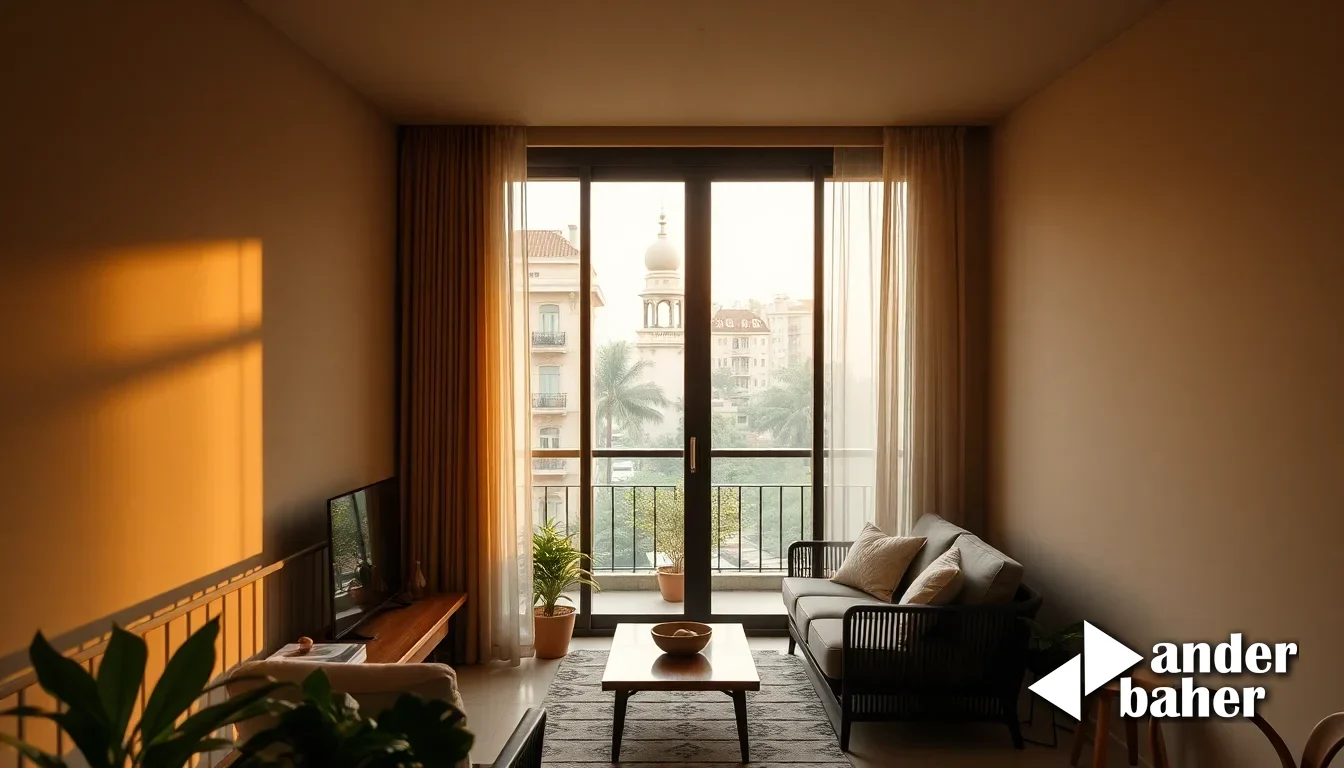
Most apartment hunters in Bengaluru arrive at the site with a calculator and a floor plan printed from a builder's portal. They measure square footage, count bedrooms, check the gym and parking. Then they sign. What they rarely do—what the profession of interior architecture asks you to do—is to inhabit the space imaginatively, to move through it at different hours, to understand how light will behave in it across seasons, and to sense whether the bones of the apartment will support the life you actually want to live.
The apartment you choose is not a neutral container. It is a series of decisions baked into concrete and glass, and those decisions will shape every morning and evening for years. Selecting the right one is the first and most consequential interior act.
Read the Light Before You Read the Lease
Bengaluru's sun is generous but punishing. From April through June, the western facades of towers along Sarjapur Road and Whitefield blaze with heat; from July through September, the monsoon casts the city in silver-grey shadow. The apartment's orientation and fenestration strategy—where windows sit, how deep they are, whether they have external shading—will determine whether you live in natural light or retreat into air conditioning by 2 p.m.
Visit the apartment at three distinct times: early morning (before 8 a.m.), midday, and late afternoon. Bring no one; pay attention only to light. Does it pool in the corners or flood evenly? Does the east-facing bedroom wake you before dawn, or does the western exposure mean you cannot work there in summer? In newly-completed towers like those rising over Yemalur and Thanisandra, where interiors are still unfurnished, this exercise is clearest—you see the raw behaviour of light on bare surfaces.
Ask the builder or agent: What is the window-to-wall ratio? Are there operable windows, or only fixed glazing? True cross-ventilation—air flowing from the northeast to the southwest—is a luxury in high-rises; it is also non-negotiable for living without constant mechanical cooling. In a premium development, this data should be transparent.
Spatial Flow and the Threshold
Enter the apartment and walk the threshold slowly. How does the foyer meet the living space? Is there a buffer zone, or do you step directly into the main volume? In Bengaluru's climate, where the boundary between indoors and outdoors is fluid—especially during monsoon—the quality of this transition matters. A well-considered threshold (what we call the ander-baher interface) can be the difference between a home that breathes and one that feels hermetically sealed.
Observe the kitchen. Is it open to the living room, or separated? If it is open, how will cooking odours travel? If it is closed, what is the proximity to storage, the approach from the main entrance, the relationship to service areas? In apartments across Bandra East and Worli in Mumbai, and now increasingly in Bengaluru's premium complexes near Yelahanka and Dollars Colony, the open-plan kitchen has become the default. But this is a design choice, not a law. Ensure it aligns with your rhythms.
Walk the bedrooms. Do they have their own light sources, or do they rely on borrowed light and air from the corridor? Can you imagine working from the secondary bedroom, or is it destined to be dark and stuffy? The materiality of walls—whether they are painted drywall, concrete block, or exposed brick—will affect acoustics and thermal comfort. Ask to see finishes and understand the thermal mass of the structure itself.
Moisture, Maintenance and the Monsoon
This is Bengaluru, not Delhi. Water arrives from the sky six months of the year. Walk to the balcony and examine its edges. Are there external waterproofing membranes visible, or is the concrete exposed? Look at the sill and the joint where the balcony meets the facade. These are the weak points. In a poorly executed tower, monsoon dampness will creep inward, ruining finishes and creating the conditions for mould.
Ask the builder: What is the waterproofing warranty? Have other units in the same development experienced seepage? This is not a trivial question. A home that leaks is a home that cannot be finished with intention—every interior choice becomes a patch over a structural failure.
Check the flooring substrate. Is it concrete, or has the builder already applied a screed? If concrete, you have flexibility to introduce thermal mass through materials—stone, tile, or polished concrete. If the screed is already down, your options narrow. The same applies to walls: are they finished, or raw? Raw surfaces allow you to specify finishes that respond to Bengaluru's humidity; finished surfaces may trap moisture.
The Materiality of Permanence
Touch the surfaces. What materials has the developer used in common areas—the lobby, the corridors, the elevator cab? If these are cheap finishes, the entire complex has a ceiling on its longevity and character. If they are considered—good stone, honest materials, generous proportions—the building itself will age gracefully, and your apartment will benefit from that context.
In the apartment itself, what finishes are standard? Polished cement screed? Ceramic tile? Paint? None of these is inherently wrong, but understand what they are. If the developer has left you with raw concrete walls and floors, you have creative freedom. If they have already finished everything, that finish carries an embodied choice—and a cost. You may love it; you may immediately want to strip it away. Either way, know before you commit.
Context: Neighbourhood and Services
The apartment does not exist in isolation. Walk the building's immediate surroundings at street level. Is there a sense of defined outdoor space—a plaza, a colonnade, planted setbacks? Or does the tower sit behind a high wall and a parking barrier? In Bengaluru's developments near Hebbal and Embassy Lake Terraces, the transition from private to public realm can feel sudden. Observe whether the building fosters connection or fortress-like isolation. Over ten years, this matters.
Visit the building's amenity spaces. If there is a landscaped garden or terrace, imagine using it. Is it truly accessible, or a decorative gesture visible only from above? A thoughtfully designed balcony or terrace can extend your usable living space dramatically; a poorly conceived one remains a view. When you are choosing an apartment, you are also choosing whether you will be able to create a purposeful integrated interior and landscape experience within it.
The Questions to Ask
Before you decide, pose these to the builder or agent: Will I have the freedom to modify finishes after possession? What materials are in the warranty, and for how long? Can I meet the building's architect or site engineer to discuss specificities? Are there precedent units I can visit that are fully lived-in, not just show flats?
Then sit in the apartment in silence. Not mentally designing it—that comes later. Just inhabit it. Does it feel like a home, or a transaction? Does the light feel natural to you? Can you imagine the seasons changing in this space, and being glad of the change?
The perfect apartment for you is not the one with the most amenities or the best external render. It is the one whose architecture, orientation, materiality and spatial logic support the life you want to lead. When you find it, that knowledge will be quiet and certain. Only then should you commit. And once you have, you can begin the deeper work of bringing intention to the interiors and thresholds that will make it truly yours.
Frequently asked
What should I prioritize when viewing a Bengaluru apartment—location, price, or interior finishes?
Prioritize the bones: orientation, light, cross-ventilation and structural integrity first. Price and location are negotiable; a well-designed space with poor light and seepage issues will drain you for years. Finishes can always be reimagined, but you cannot change the window placement or the moisture behaviour of the concrete.
How do I assess whether an apartment will stay cool and dry through Bengaluru's monsoon?
Examine the balcony waterproofing detail, the window sill design, and ask the builder directly about seepage history in that specific tower. Visit in early morning and late afternoon to gauge how heat builds. Request the thermal mass strategy—does the structure use concrete thermal mass, or only air conditioning?
Should I choose an open-plan kitchen or a closed one in a new Bengaluru apartment?
This depends on your cooking patterns and noise tolerance. Open-plan offers visual flow but transmits odours and heat. A closed kitchen requires careful placement relative to the main living space and storage. Neither is inherently superior; ensure the layout reflects how you actually cook and entertain.
Ready to transform your space — inside or out?
Tell us a little about your home or office. We'll get back within one working day.
Book a consultation