
Magazine › Architecture
Ancient Wisdom, Modern Marvels: India's Quiet Architecture Revolution
From jali screens to rammed earth, Indian architects are mining centuries of climate-responsive design to create homes that breathe with the seasons.
By the Ander Baher Editorial Desk · 27 July 2026
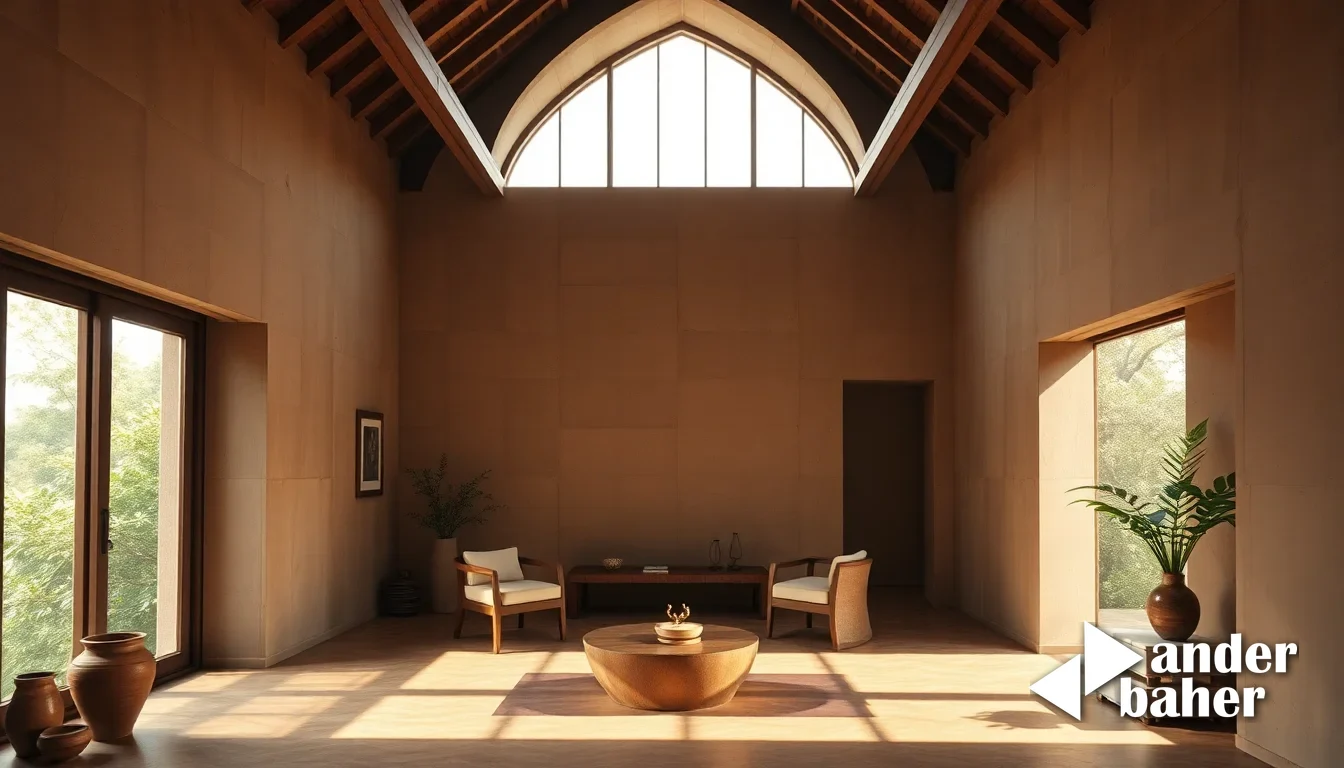
In a Bangalore bungalow built in 1982, architect Ar. Anupama Kundoo noticed something peculiar during a monsoon. The century-old wooden jali screens that framed the veranda weren't just ornamental—they were orchestrating air flow, moderating humidity, and filtering light with a precision that modern HVAC systems struggle to match. This wasn't accident. It was accumulated intelligence, layered into design across generations.
India's contemporary architecture renaissance isn't about rejecting the modern. It's about recognizing that the solutions to today's climate crisis have already been tested through centuries of lived experience in subcontinental heat, moisture, and seasonal extremes.
Reading the Vernacular
Consider the courtyard. From the havelis of Rajasthan to the nalukettu of Kerala, the inward-facing court has long been India's answer to temperature regulation and privacy. A Mumbai architect recently completed a 2,000-square-foot apartment that inverts the typical high-rise logic: instead of maximizing western views, the design spirals around a central void that connects all three levels. Natural light enters diffused and cool; air circulates without mechanical intervention; the residents experience seasonal change—monsoon shadows, winter angles—within their own walls.
This isn't nostalgia. It's recalibration. The jali screen appears in contemporary homes not as museum piece but as working technology. Perforated metal reinterprets the concept for modern materials. The principle remains: depth, texture, and perforation filter and slow light before it enters inhabited space.
Materials That Remember
Rammed earth has returned to Indian architecture with quiet confidence. The material—soil, straw, and water—compresses into walls of remarkable thermal mass. A Bangalore residence built entirely in rammed earth maintains interior temperatures 4-6 degrees cooler than surrounding structures during peak summer, without air conditioning. The walls age visibly, developing patina and weathered character that speaks to time passing rather than deterioration.
Laterite, the iron-rich stone quarried across the Western Ghats, carries water transport systems within its structure. Brick—handmade, sun-dried brick—absorbs and releases moisture with the seasons. These materials don't fight the Indian climate. They negotiate with it.
The Calibrated Home
The shift toward eco-conscious architecture in India reflects something deeper than environmental concern. It acknowledges that a house built in conversation with its place—its weather patterns, seasonal rhythms, and local materials—simply feels better to inhabit. The cooling effect of a deep veranda isn't just functional; it's an embodied experience. The diffuse light through a wooden screen isn't just energy-efficient; it's psychologically restorative.
What's emerging across Mumbai's suburbs, Bangalore's garden-city corridors, and Kerala's backwater renovations is architecture that refuses the either-or proposition. Not traditional or contemporary, but both. Not beautiful or functional, but aesthetic because it's efficient. The home that works with seasonal change, that ages gracefully, that requires less energy to maintain comfort—this is the revelation. The wisdom was always there. We're simply remembering how to read it.
Frequently asked
How do traditional Indian architectural elements like jali screens actually improve home comfort?
Jali screens and similar vernacular devices—courtyards, deep verandas, perforated screens—modulate light, temperature, and air circulation without mechanical systems. They slow and filter light before it enters living spaces, and their depth and texture create natural convection patterns that regulate humidity and cooling, especially effective in subcontinental heat and monsoon conditions.
What makes rammed earth and laterite viable for contemporary homes in India's climate?
These materials possess inherent thermal mass and hygroscopic properties—they absorb and release moisture seasonally, negotiating with rather than resisting local climate extremes. A rammed earth residence can maintain interior temperatures 4–6 degrees cooler than surrounding structures during peak summer without air conditioning, while laterite's capillary structure manages water transport naturally.
Is vernacular-inspired architecture only suitable for traditional or period homes?
No. Contemporary interpretations—perforated metal reinterpreting jali logic, central voids replacing typical high-rise orientations, handmade brick alongside modern finishes—demonstrate that these principles integrate seamlessly into modern spatial and aesthetic demands, creating homes that are both functionally efficient and visually restrained.
Ready to transform your space — inside or out?
Tell us a little about your home or office. We'll get back within one working day.
Book a consultation