
Magazine › Architecture
When Rooftops Become Skylines: India's Crowned Towers
The architectural crown—once reserved for monuments—now shapes how Indian cities are recognized. What does this mean for the homes within them?
By the Ander Baher Editorial Desk · 6 September 2026
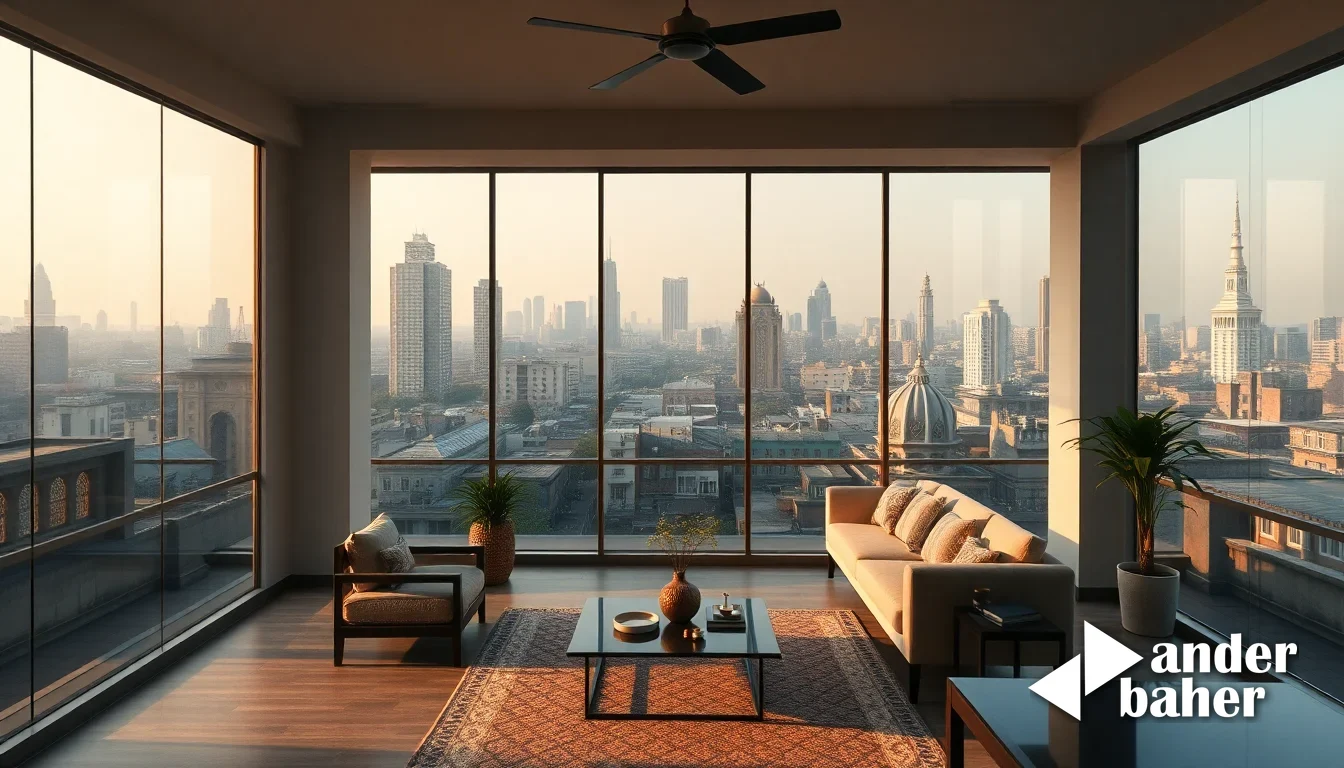
A city's silhouette tells its story before you ever arrive. The distinctive peaks, curves, and crowned summits that puncture the horizon become visual anchors—the first thing a visitor recognises, the last thing they remember. In Mumbai and Bangalore, where rapid vertical growth has reshaped the urban landscape, the architectural crown has moved beyond ornament into identity.
For decades, Indian residential architecture concerned itself with what happened inside: the courtyard, the living room, the kitchen where family rhythms unfolded. The roofline was practical—a slab, pitched for drainage, sometimes crowned with a water tank or terrace. But as our cities grew skyward and density compressed neighbourhoods into towers, something shifted. The crown—the tip of the building, the highest gesture—became language.
The Crown as Belonging
There is something deeply human about wanting your building to be recognisable from a distance. In crowded metros, where thousands of structures compete for visual territory, a distinctive roofline becomes the building's signature. A steeply pitched crown, a geometric cutout, a planted terrace that catches the light differently—these are no longer decorative flourishes. They are how the building announces itself to the city.
This matters for residents too. When you live in a residential tower, the roofscape is often the only outdoor space that feels truly communal and uncompromised. Unlike balconies (which are private, measured, constrained), the rooftop can breathe. A crowned rooftop—one designed with intention—becomes a gathering place where the building's character is felt most acutely. The view out is panoramic; the view of the building itself, from the city below, is equally important.
From Ornament to Necessity
Indian architecture has always understood the roof as expressive. Jharokhas, chattris, domed tops—traditional homes used the roofline to communicate status, function, and aesthetic conviction. The difference now is scale and material. A single-family haveli in Jaipur had one roofscape; a forty-storey residential tower has one roofscape visible to half a million people.
This amplification forces a question: what should a crowned tower in contemporary India communicate? Restraint or ambition? Rootedness or aspiration? Some architects are layering traditional geometries—the thrust of a pyramid, the curve of a dome—into modern forms. Others are designing functional crowns: gardens that terrace downward, sky lounges with clear lines, even living crowns where vegetation becomes the building's most visible gesture. These roofscapes aren't added at the end; they're integral to how the building is conceived.
A Roofscape Philosophy
The crowned tower is also a practical statement about how cities should grow. A building that thinks carefully about its top—about its relationship to sky, to the city's visual fabric, to the people who will gather there—is a building that thinks about completion. Not every tower needs a dramatic crown. Some of India's most beautiful roofscapes are exercises in restraint: a clean line, a subtle material shift, a thoughtful setback that doesn't announce itself but is felt in how the building sits within the skyline.
For residents selecting a home in a new tower, the roofscape is worth noticing. It signals whether the architect cared about the whole building or just the sellable floors. A crowned rooftop—designed with intention—is often where a building's true character lives.
Sources & further reading
- designboom — paul clemence on how skyscraper crowns become landmarks of shanghai ↗
- Dezeen — Modular combat boots among footwear projects from Häme University of Applied Sciences ↗
- Dezeen — Ivy Studio creates "soothing" exotic animal clinic in brutalist Quebec bank ↗
- designboom — continuous white DJ console integrates turntables, mixers, and hidden cables ↗
An original Ander Baher perspective, informed by the coverage above.
Ready to transform your space — inside or out?
Tell us a little about your home or office. We'll get back within one working day.
Book a consultation