
Magazine › Architecture
Building Patience: When Architecture Becomes Ritual
A residence in the high Andes reminds us that meaningful spaces emerge not from speed, but from a patient conversation between craft, climate, and community.
By the Ander Baher Editorial Desk · 17 September 2026
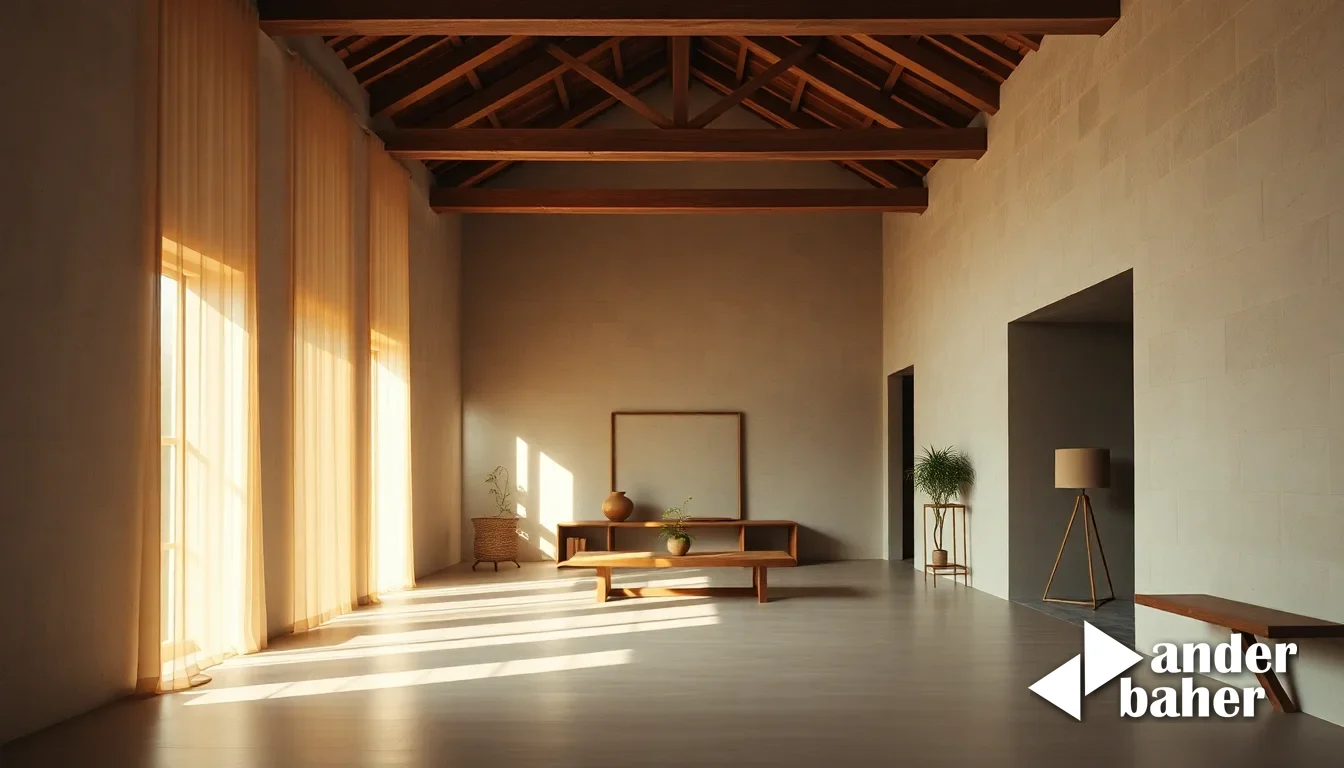
There is a particular kind of silence in a house that has been built slowly. Not neglect or incompletion—but the hush of intention. When a building takes time to emerge, when its materials are chosen not for availability alone but for their relationship to the place itself, the rooms seem to listen. They hold the altitude of thinking that preceded their walls.
This sensibility—of architecture as patient craft rather than rapid assembly—offers something vital to contemporary Indian homes, where the pressure to build fast and build new often eclipses the deeper work of building right.
The Grammar of Place
When we speak of vernacular building traditions—whether in the laterite walls of Kerala's backwaters or the rammed earth structures of Rajasthan—we're recognizing a simple truth: materials exist in relationship to their landscape. They age in conversation with their climate. A stone wall in the Himalayas performs differently than one in the Deccan; the craft adapts, generation by generation.
The impulse in recent design practice has been to extract materials from this dialogue, to use them decoratively while ignoring their original logic. A Mumbai apartment dressed in Himalayan slate, installed in sealed units under controlled air conditioning, becomes a quotation marks around authenticity rather than an expression of it. The material is present but its meaning is absent.
True climate-responsive design begins with listening. It asks: what grows here, what weathers here, what has proven durable across centuries? In Bangalore's warm, humid climate, high timber ceilings with deep overhangs aren't nostalgic flourishes—they're engineering, refined across generations. In a monsoon-prone coastal home, the angle of a veranda isn't ornamental; it's mathematics.
The Architecture of Slowness
To build slowly is often read as a luxury available only to those without constraint. But slowness in design means something different: it means allowing time for observation, for testing, for the inevitable recalibrations that come when idea meets material reality. It means involving the people who will inhabit the space—understanding their habits, their seasons, their relationship to light and air.
This doesn't require a heritage site or a rural setting. A Bangalore home can be designed in conversation with its residents' actual rhythms: where morning light pools, where the afternoon heat concentrates, where the monsoon wind enters. A home that acknowledges these patterns requires less mechanical intervention. It becomes, gradually, more itself.
The contemporary rush to completion often leaves spaces in a state of permanent incompletion: furnished but not inhabited, decorated but not lived-in. A home built with patience—and this includes the patient design phase—matures into use rather than merely receiving it.
What Remains
The most enduring homes in India are those that have absorbed their owners' lives: the weathered devotion of a daily-used threshold, the patina of hands on a railing, the specific wear pattern of footsteps on stone stairs. These marks aren't flaws to be sealed and protected; they're evidence of the space doing its work. They're proof of inhabitation.
When we choose to build with intention—with materials that age gracefully, with forms that work with climate rather than against it, and with processes that allow time for thought—we're not choosing the past. We're choosing a future in which our homes are still beautiful to live in, not just to photograph, fifty years from now.
Sources & further reading
- ArchDaily — KUSKA Residence / Taller MACAA (Misión de Arquitectura, Construcción y Arte en los Andes) ↗
- ArchDaily — La Salle School / FP Arquitectura ↗
- ArchDaily — Corner Villa / Super Void Space ↗
- ArchDaily — Hagidong House 2 / Hyunjoon Yoo + Partners ↗
An original Ander Baher perspective, informed by the coverage above.
Ready to transform your space — inside or out?
Tell us a little about your home or office. We'll get back within one working day.
Book a consultation