
Magazine › Garden & Landscape
Designing Your Garden in Real Time: How to Use AI for Landscape Concepts
Explore how conversational AI can accelerate outdoor space concepts before you meet a designer—ideally paired with professional refinement for climate-responsive gardens.
By the Ander Baher Editorial Desk · 10 November 2026
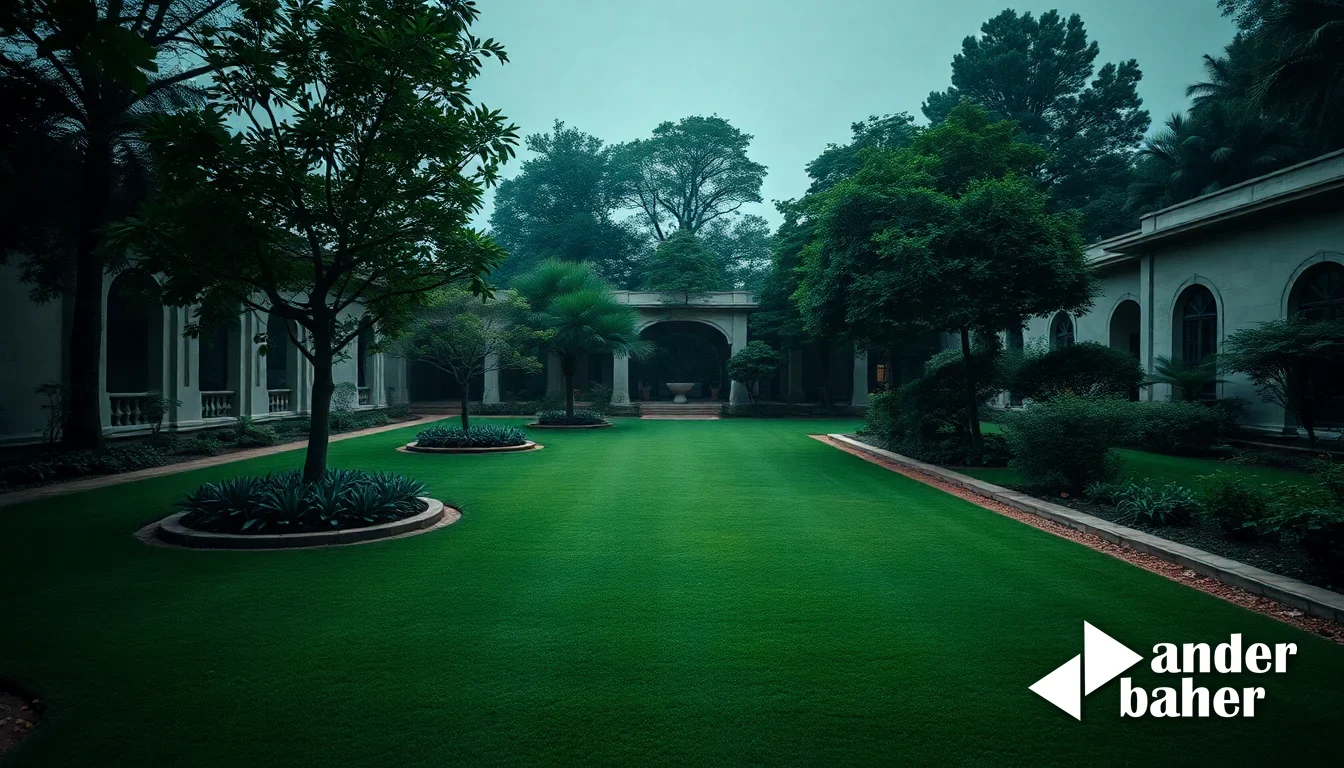
You stand on your newly-handed-over Whitefield balcony—eighteen floors up, south-facing, unrelenting afternoon sun—and wonder how to make it live. A traditional path means waiting weeks for an appointment, mood boards scattered across email, revisions stalling at language. There's another way now: conversational AI can become your first sketch partner, translating impulse into concept in real time.
The premise is deceptively simple. Rather than beginning with a blank page or a generic Pinterest board, you describe your space—dimensions, aspect, light pattern, how you actually use it—to an AI assistant. Within seconds, you have multiple landscape narratives to test, refine and walk through before a single professional pencil touches paper. It's not a replacement for climate expertise or structural knowledge. It's a thinking partner that collapses the gap between desire and articulation.
How to Brief an AI on Your Outdoor Space
The quality of your AI output depends entirely on the specificity of your input. Vague prompts yield vague gardens. Instead of "make my balcony nice," describe what you actually need: "I have a 12×8-foot south-facing balcony in Bengaluru. It gets full sun from 10 a.m. to 5 p.m. I work from home and want a green visual buffer from the adjacent tower. I water plants twice weekly. I prefer low-maintenance perennials and structural greenery over flowering annuals. The floor is exposed concrete. What would you suggest?"
Now you've given the AI three essential anchors: climate context (Bengaluru's heat and humidity), functional constraint (visual privacy, work-from-home psychology), and your maintenance tolerance (twice-weekly watering, not daily). The AI can now reason through what thrives—bougainvillea, podocarpus, ferns in dappled pockets—rather than defaulting to ornamental cherry or fragrant jasmine that demands cooler seasons.
Similarly, ground-floor gardens benefit from hyper-local detail. If you're in a newly-completed tower off Sarjapura Road, mention if monsoon water flows toward your plot (it often does). If you're in an established Hebbal property with a northwest-facing courtyard, the AI can factor seasonal wind and afternoon glare. Precision in the prompt is precision in the output.
Building a Visual Vocabulary Before You Meet Your Designer
One of the most underestimated uses of AI in landscape planning is vocabulary building. You may know you want "calm" and "green," but those words mean nothing to a contractor or a landscape architect until they're anchored to images, materials and spatial relationships.
Use the AI to generate conceptual descriptions of different garden archetypes: a monsoon-ready Bengaluru garden might favour slatted timber screens, permeable gravel, deeply-rooted native trees and strategic water swales. A Bandra East balcony garden, battling sea-spray and salt, leans toward succulent rockery, salt-tolerant shrubs and raised beds with roof drainage. Ask the AI to articulate the *why* behind each choice—not just the *what*. When you show your designer these AI-generated narratives, you're no longer starting from scratch. You're starting from a shared language.
Download or screenshot these concepts and use them as conversation starters with professionals. Our integrated interior and landscape practice thrives on clients who arrive with clarity—it means we can move directly into site analysis and material refinement rather than exploratory brainstorming.
What an AI Landscape Tool Gets Right—and What It Misses
AI excels at spatial composition, plant pairing and design typologies. Ask it to suggest a layered privacy screen for a Domlur apartment balcony, and it will offer multiple approaches: evergreen shrub screens with punctuated access, a living jali wall of climbing vines on a timber frame, or a sculptural combination of specimen plants at varying heights. Each has merit. Each shifts the visual and functional character of your outdoor room.
What AI struggles with—and where human expertise becomes irreplaceable—is live climate responsiveness, structural durability and monsoon reality. An AI may suggest a lush shade garden for a Lower Parel terrace, but it doesn't know that Mumbai monsoon humidity creates algae on every south-facing surface without proper drainage design. It doesn't account for the specific waterproofing failures that plague balconies in a decade-old Mahalaxmi building. It can't inspect soil depth, root competition from adjacent trees or the load-bearing capacity of a slab.
Similarly, AI tends toward the generic when it comes to maintenance scaling. A conceptual rainwater harvesting system sounds elegant in text, but executing it on a Hennur high-rise requires structural drawings, plumbing integration and regulatory knowledge that only comes from on-site experience.
From Concept to Execution: Moving an AI Sketch Into Reality
The most effective workflow combines AI ideation with professional refinement. Begin with the AI. Explore 3–5 distinct garden narratives. Test them against your light, budget, maintenance tolerance and the actual uses you imagine. Print them. Live with them for a day. Which concepts spark genuine recognition? Which feel forced?
Once you've narrowed down 1–2 directions, bring them to a landscape professional. Their role shifts from "convince me why I should invest in a garden" to "help me execute this vision in a way that thrives in Bengaluru monsoons" or "make this work within our building's structural constraints." This is where climate analysis, material testing, phasing and contractor coordination live. This is also where free AI design concepts yield to the irreplaceable intelligence of someone who has watched a thousand gardens age in Indian seasons.
For interiors paired with outdoor thresholds—say, a just-handed-over Prestige Parklane apartment whose new owners are designing both the living room and the adjoining balcony—the same principle holds. Use AI to explore how the interior colour story, material language and functional zones might extend into the garden. Can the living room's stone palette continue into a hardscape surround? Should the plants echo the interior's green tones or offer chromatic relief? These are conversations AI can seed; only site presence and embodied experience can refine them into spaces that actually live.
Begin with intention and clarity. Let technology collapse the distance between impulse and articulation. Then invite expertise to root your vision in place—in the particular light, climate and context of your home.
Frequently asked
How do I describe my Bengaluru balcony garden to an AI tool so it gives useful suggestions?
Include dimensions, sun exposure (hours and direction), water access, maintenance frequency, and your main goal (privacy, flowers, low-maintenance green, herbs). Example: "12×8 ft, south-facing, full sun 10 a.m.–5 p.m., twice-weekly watering, I want a visual screen." Specificity produces specificity.
Can I use ChatGPT or a landscape AI app to design my entire garden instead of hiring a designer?
AI generates compelling concepts and vocabulary quickly, but misses critical details—monsoon drainage in Mumbai, balcony load limits, soil depth, structural waterproofing in year-old buildings. Use AI for ideation; pair it with a landscape professional for execution in Indian climates.
What's the best way to move from an AI garden concept to actually building it?
Screenshot or print 2–3 AI concepts you resonate with. Live with them for a day. Then bring them to a professional who can analyze your site (light, drainage, structure), refine the design and coordinate construction—ensuring it survives monsoons and thrives year-round.
How long does it take to develop a landscape design using AI tools versus a traditional designer?
AI generates multiple concepts in minutes; traditional design takes weeks of meetings and revisions. The hybrid approach—AI for rapid ideation, designer for climate and structural refinement—often compresses overall timeline while improving the final outcome.
Ready to transform your space — inside or out?
Tell us a little about your home or office. We'll get back within one working day.
Book a consultation